Govt Raises Petrol and Diesel Prices
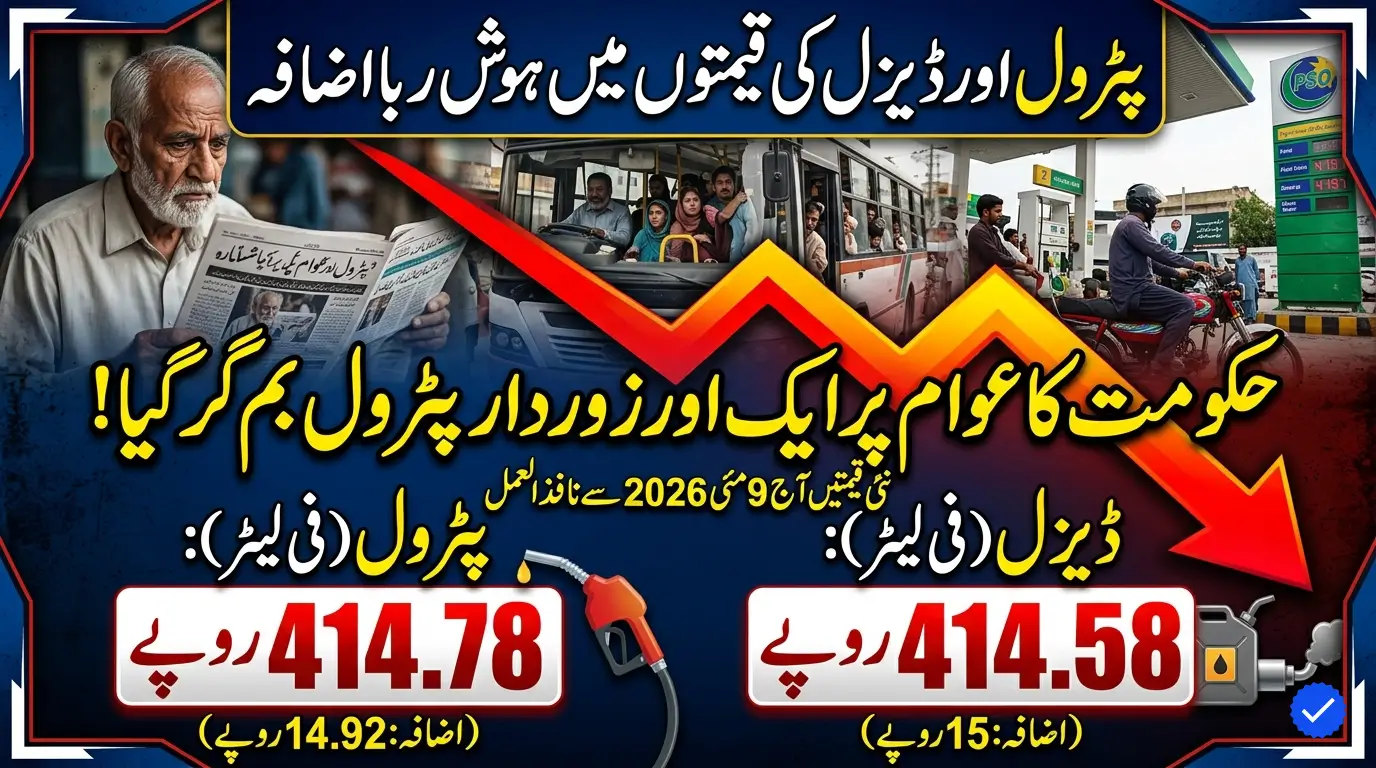
The federal government has once again increased petrol and diesel prices, creating fresh concern among citizens across the country. The new prices were officially announced late Friday night and came into effect from Saturday, May 9, 2026. The decision was approved after recommendations related to changing international oil prices and economic pressure on the country.
FIFA Triples Prices of Most Expensive 2026 World Cup Final Tickets
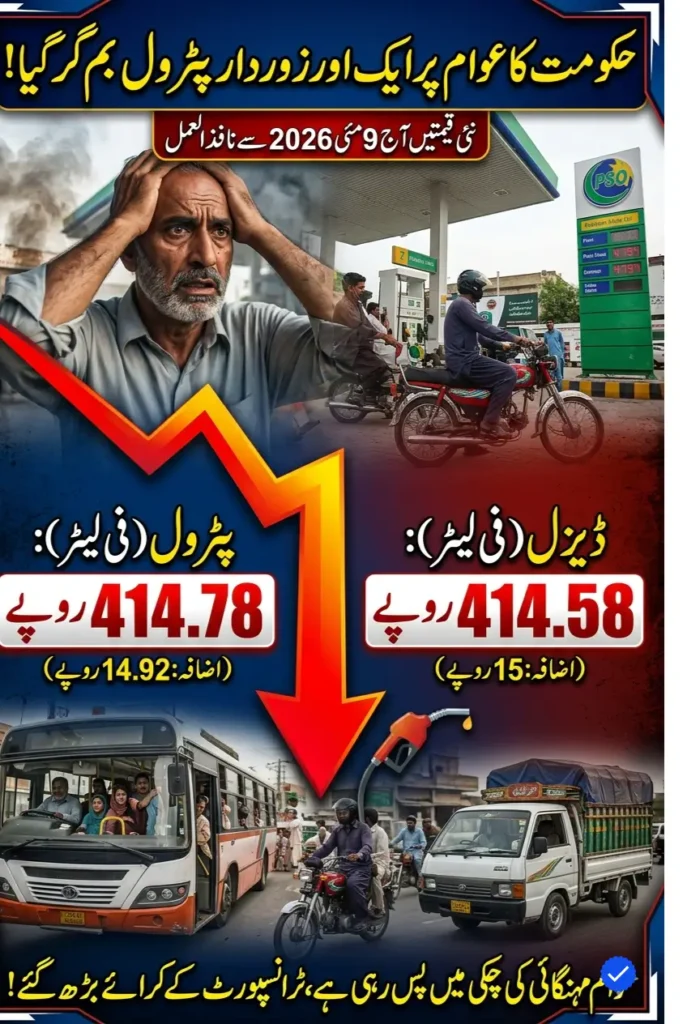
According to the official notification, petrol price has been increased by Rs. 14.92 per litre while diesel price has gone up by Rs. 15 per litre. After the latest increase, petrol is now being sold at Rs. 414.78 per litre and diesel at Rs. 414.58 per litre. This sudden rise has become a major topic of discussion among the public, especially people already struggling with inflation and expensive daily necessities.
Citizens Face More Financial Pressure
The new fuel prices are expected to directly affect millions of people across Pakistan. Petrol and diesel are connected with transportation, business activities, farming, and the delivery of goods. Whenever fuel prices increase, transport fares and prices of basic items also rise in many areas.
Many citizens believe the government should provide relief instead of increasing fuel prices repeatedly. Workers, students, shopkeepers, and salaried people are already facing difficulties because of rising electricity bills, food prices, and utility costs. The latest increase has added another burden on household budgets.
Transport Sector Likely to Be Affected
Public transport operators are likely to increase fares after the rise in fuel prices. Bus owners, van drivers, and goods transport companies often adjust prices whenever diesel or petrol becomes expensive. This situation can increase travel costs for daily passengers and workers.
Transporters say fuel is one of their biggest expenses, and continuous increases make it difficult to continue operations at old fares. In many cities, people depend heavily on public transport for jobs, education, and daily travel. Any increase in fares can create problems for low-income families.
SBP Extends Special Oil Import Relief As Market Volatility Continues
Prices of Goods May Rise Further
Experts believe the latest fuel hike may increase inflation in coming days. Goods transported from one city to another depend on diesel-powered vehicles. When transport costs increase, shopkeepers and suppliers usually pass the extra burden to consumers.
Food items, vegetables, fruits, flour, milk, and other essential products may become more expensive in different markets. Traders fear that business activity could slow down if people reduce spending due to higher daily expenses. Small businesses and local markets are also expected to feel pressure from rising transportation costs.
Government Explains the Decision
Government officials say fuel prices are linked with international oil markets. According to authorities, fluctuations in global crude oil prices and currency pressures make fuel adjustments necessary. Officials also state that maintaining fuel supply in the country requires difficult economic decisions.
The government has recently taken several financial steps aimed at stabilizing the economy. However, many citizens feel these decisions are increasing difficulties for ordinary people. Opposition parties and critics have also reacted strongly to the latest increase and demanded relief measures for the public.
NAB Freezes 4 Major Bahria Town Properties, Including Bahria Icon
Last Week’s Increase Added to Concerns
This is not the first fuel increase in recent weeks. Just last week, the government had already raised petrol price by Rs. 6.51 per litre and diesel by Rs. 19.39 per litre. Because of repeated increases within a short period, many people fear that inflation may continue rising in the coming months.
Citizens on social media expressed anger and disappointment after the announcement. Many users said fuel prices have reached levels that are difficult for common people to afford. Others questioned how middle-class and poor families will manage daily expenses if inflation continues.
Farmers and Businesses Under Pressure
The increase in diesel prices can also affect farmers because agricultural machinery and transport vehicles mostly use diesel fuel. Farmers may face higher costs during crop transportation and farming activities. This situation could also affect agricultural production expenses in rural areas.
Businesses that rely on delivery services and transportation are expected to face additional operational costs. Companies may increase prices of products and services to manage rising fuel expenses. Small business owners fear reduced profits as customers may cut spending due to inflation.
PM Shehbaz Inaugurates Major Development Projects in Gilgit
Economic Challenges Continue
Pakistan has been facing economic challenges for the past several years, including inflation, currency pressure, and rising import costs. Fuel prices are often influenced by global oil markets and government taxation policies. Economic experts say international developments can quickly affect local petroleum rates.
Many citizens hope the government will introduce policies to reduce inflation and support low-income groups. Some analysts believe stability in international oil prices could help reduce pressure in the future. However, current conditions remain difficult for both consumers and businesses.
Public Reaction Growing Stronger
People from different cities have shared concerns over the continuous increase in living costs. Daily wage workers and salaried employees say their incomes are not increasing while expenses continue to rise every month. Students and families using motorcycles and cars for daily travel are also worried about higher fuel expenses.
Some citizens are now reducing unnecessary travel and trying to save fuel due to increasing costs. Others fear that more increases in electricity bills and transport fares may follow soon. Public frustration is growing as inflation continues to impact everyday life across the country.
Telcos Push Govt to End Customs Duty on 5G Devices Reduce Taxes
FAQs
1. How much did petrol prices increase?
The government increased petrol prices by Rs. 14.92 per litre.
2. What is the new petrol price in Pakistan?
The new petrol price is Rs. 414.78 per litre.
3. How much did diesel prices increase?
Diesel prices were increased by Rs. 15 per litre.
4. When did the new fuel prices become effective?
The new petrol and diesel prices became effective from May 9, 2026.
5. Why did the government increase fuel prices?
According to officials, the increase was linked to international oil market changes and economic pressure on the country.
Final Words
The latest increase in petrol and diesel prices has created fresh financial pressure on citizens across Pakistan. Rising fuel costs are expected to affect transport fares, food prices, businesses, and household budgets in the coming days. While the government says the decision was necessary because of international market conditions, many people are demanding relief measures to control inflation and support the public during difficult economic times.
Federal Constitutional Court Upholds Dismissal in Case of Job Quota for