PM’s Advisor Blames Public
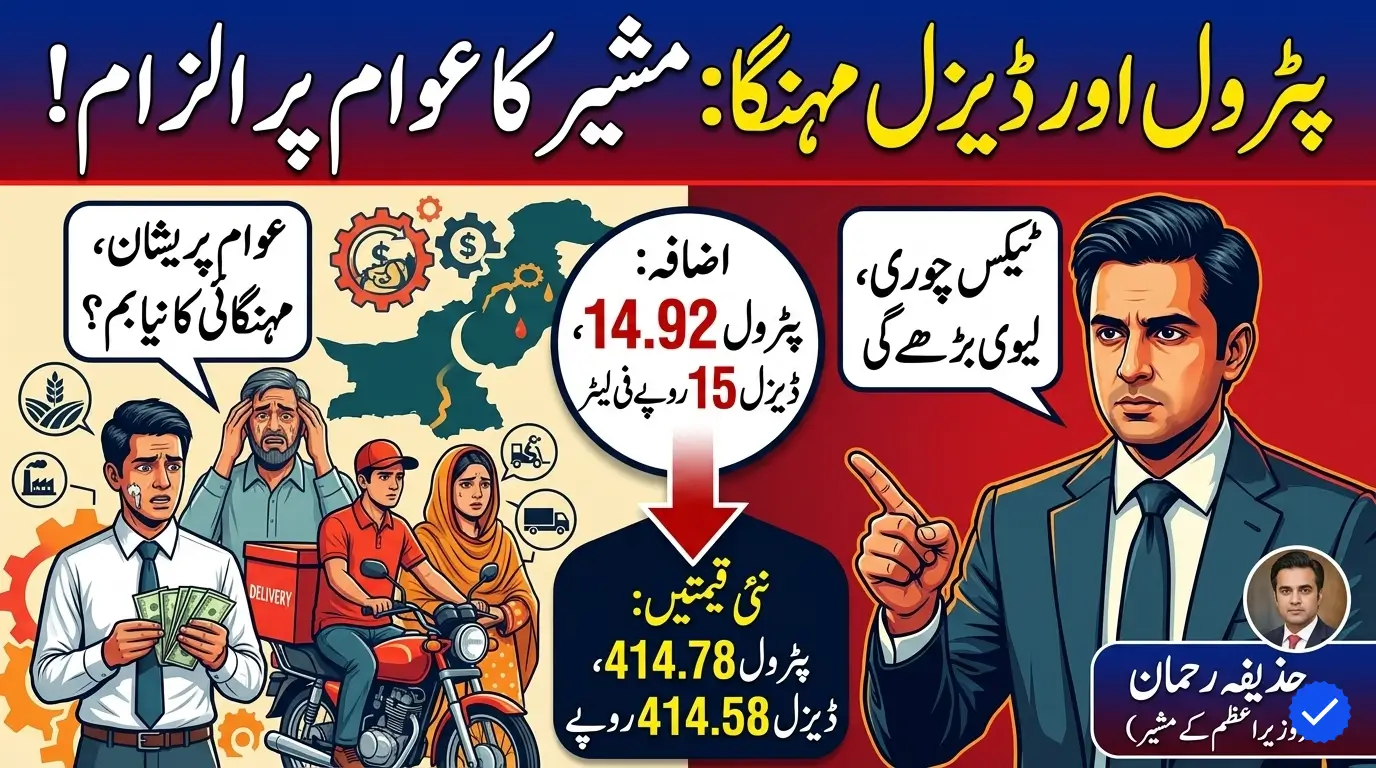
Special Assistant to the Prime Minister, Huzaifa Rehman has triggered public criticism after comments regarding the latest increase in petrol and diesel prices across Pakistan. During a discussion with a private television channel, the PM’s advisor stated that weak tax compliance among citizens forced the government to recover missing revenue through higher petroleum levy charges.
Next IMF Budget Expected to Hit Salaried Pakistanis Harder Than Ever
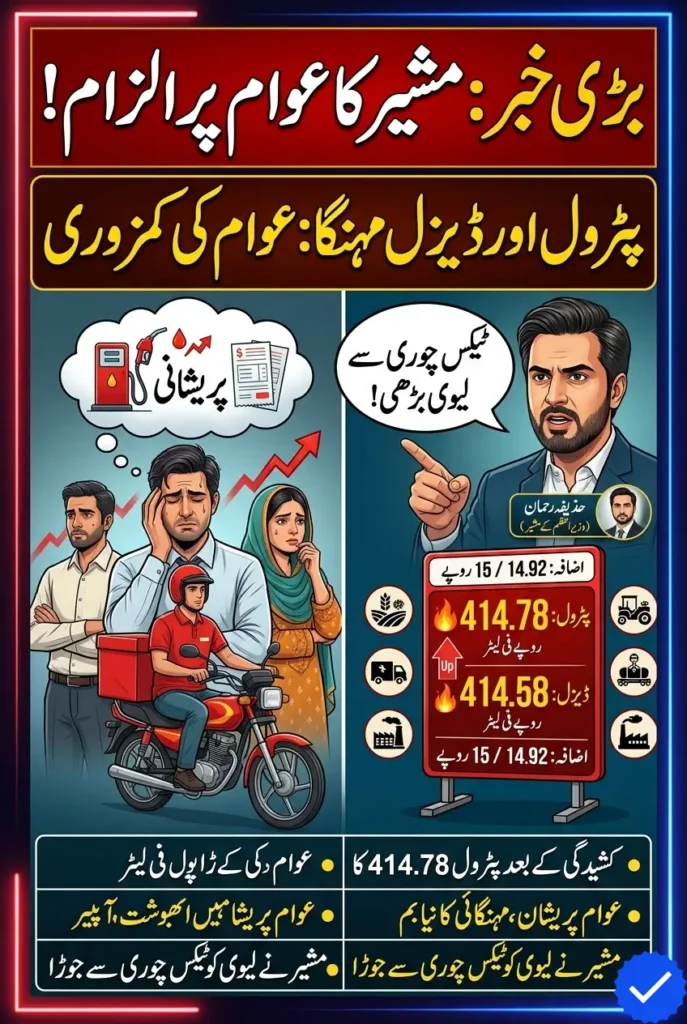
His remarks came shortly after the federal government announced another increase in fuel prices under the approval of Prime Minister Shehbaz Sharif. According to the latest notification, petrol prices increased by Rs. 14.92 per litre while high-speed diesel prices rose by Rs. 15 per litre. Following the hike, petrol now costs Rs. 414.78 per litre, while diesel has reached Rs. 414.58 per litre across the country.
Government’s Justification for Fuel Price Increase
During the interview, Huzaifa Rehman argued that the government is facing financial pressure because a large portion of the population does not pay taxes properly. According to his statement, the government used petroleum levy collections to compensate for lower tax revenues and meet financial requirements.
The comments quickly attracted attention because fuel prices directly affect almost every sector of the economy. Petrol and diesel are essential for transportation, industrial operations, agriculture, and electricity generation. Any increase in fuel costs immediately affects inflation and raises the prices of daily-use goods and services.
Public Reaction to the Statement
Many people reacted strongly to the PM advisor’s comments on social media and television discussions. Critics argued that ordinary citizens are already burdened by rising inflation, electricity bills, and expensive fuel prices. Some users questioned why the government continues increasing indirect taxes instead of improving the overall tax collection system.
Others expressed frustration that salaried workers and middle-class families are already paying taxes regularly while still facing increasing living costs. Public transport users, small business owners, and delivery workers are among the groups most affected by rising fuel prices.
Sindh Announces Early Salaries Pensions Ahead of Eid ul Adha
Impact of Petrol and Diesel Prices on Daily Life
Fuel price increases have a direct impact on transportation costs across Pakistan. Bus fares, ride-hailing charges, freight costs, and delivery expenses often rise immediately after petrol and diesel rates increase. Businesses then transfer these additional costs to consumers through more expensive products and services.
The latest fuel hike is expected to increase inflation further in coming weeks. Food prices, vegetables, construction materials, and other basic commodities may become more expensive due to higher transportation and supply chain expenses. Economists warn that continuous fuel price increases can reduce purchasing power and create additional financial stress for households.
Petroleum Levy and Government Revenue
The petroleum levy has become one of the government’s major revenue sources during recent years. Unlike some other taxes, petroleum levy charges are directly collected through fuel sales. Governments often increase these charges to generate additional income without immediately introducing new direct taxes.
However, critics argue that petroleum levies place a heavier burden on ordinary consumers because everyone pays higher fuel prices regardless of income level. Since transportation affects all sectors of the economy, indirect taxes on fuel can contribute significantly to inflation.
Pakistan’s Economic Challenges
Pakistan is currently facing several economic difficulties, including inflation, currency pressure, rising import costs, and strict IMF-related financial conditions. The government is under pressure to increase revenue collection while also controlling the fiscal deficit.
Officials argue that difficult economic decisions are necessary to maintain financial stability and meet international obligations. However, opposition parties and economic analysts say the burden of these measures often falls mainly on middle and lower-income citizens.
Petrol Prices in Pakistan Jump 64% After Three Months of US-Iran War
IMF Pressure and Revenue Targets
The recent fuel price increases also come during ongoing discussions related to Pakistan’s IMF program. International lenders have repeatedly encouraged Pakistan to improve tax collection and reduce financial deficits. Petroleum levies are often viewed as a fast method for generating government revenue.
Experts believe the government may continue relying on indirect taxes if broader tax reforms are not implemented successfully. Expanding the tax base and improving compliance among large sectors of the economy remain major challenges for policymakers.
Effect on Businesses and Transport Sector
Transporters and business groups have also raised concerns over rising diesel prices. Diesel is widely used in trucks, buses, agricultural machinery, and industrial operations. Higher diesel costs increase freight charges, which then affect the prices of goods transported across the country.
Small businesses already struggling with electricity costs and inflation fear that continuous fuel hikes may reduce consumer demand and increase operating expenses. Some traders warn that additional increases could slow economic activity and create further pressure on markets.
Debate Over Tax System
The advisor’s comments have also restarted debate about Pakistan’s taxation system. Economists have long argued that the country’s tax structure depends too heavily on indirect taxes instead of expanding direct taxation on untaxed sectors and wealthy individuals.
Many analysts believe the government needs stronger reforms to improve documentation of the economy, reduce tax evasion, and ensure fair taxation across all sectors. Without structural reforms, authorities may continue depending on fuel levies and utility charges to generate revenue.
Saudi Arabia Provides $2 Billion Support to Strengthen Economy
Political and Social Pressure on Government
The latest increase in fuel prices comes at a sensitive time for the government as public frustration over inflation continues growing. Rising living costs remain one of the biggest concerns for citizens across Pakistan.
Political observers believe economic issues, especially fuel and electricity prices, may continue dominating public debate in the coming months. The government will likely face increasing pressure to balance revenue generation with public relief measures.
Key Facts
- Petrol prices increased by Rs. 14.92 per litre in the latest government decision.
- Diesel prices were raised by Rs. 15 per litre across Pakistan.
- Petrol now costs Rs. 414.78 per litre while diesel costs Rs. 414.58 per litre.
- PM advisor Huzaifa Rehman linked higher fuel prices to low public tax compliance.
- Rising fuel prices are expected to increase transportation costs and inflation further.
Final Word
The recent comments by PM advisor Huzaifa Rehman have added fresh controversy to the ongoing debate over Pakistan’s rising fuel prices and economic challenges. While the government argues that petroleum levies are necessary to meet revenue targets and financial obligations, many citizens believe ordinary people are carrying the biggest burden of inflation and taxation. As petrol and diesel prices continue increasing, concerns about inflation, transport costs, and household expenses are expected to grow further.