
PTA Pushes Telecom Companies to Speed
The Pakistan Telecommunication Authority has proposed new measures to speed up telecom tower installations across the country as Pakistan moves closer to launching 5G services. The telecom regulator believes that slow tower deployment is one of the biggest obstacles preventing the successful rollout of next-generation mobile internet technology.
Faysal Bank & Avanza Strengthen Digital Collaboration
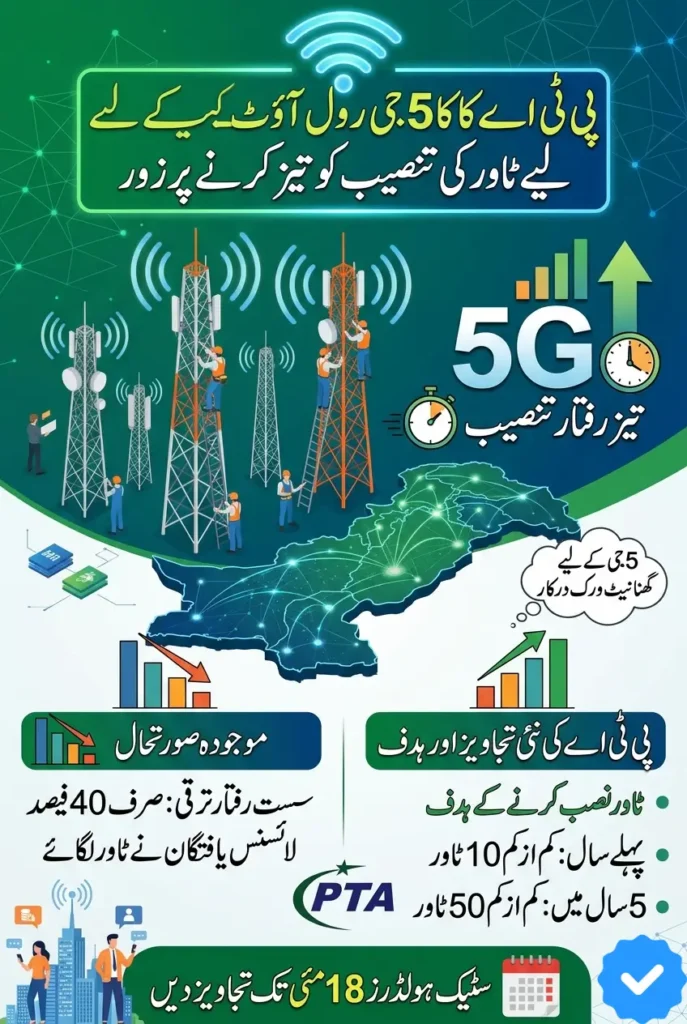
According to PTA officials, the current pace of telecom infrastructure development is not sufficient to support 5G connectivity nationwide. The authority revealed that out of 15 licensed telecom infrastructure providers, only 40 percent have successfully installed telecom towers across Pakistan. This situation has raised concerns about delays in improving mobile internet quality and preparing the country for advanced digital services.
Why Telecom Towers Are Important for 5G
Telecom towers play a critical role in mobile communication systems because they carry wireless signals between users and network providers. Unlike older mobile technologies, 5G requires a much denser and stronger network of towers to provide high-speed internet, low latency, and stable coverage.
5G technology uses higher frequency bands that can deliver faster internet speeds but have shorter coverage ranges compared to older networks like 3G and 4G. This means telecom companies must install more towers and supporting equipment to ensure smooth and reliable service in urban and rural areas.
Slow Infrastructure Growth Raises Concerns
The PTA stated that only 9 out of 15 licensed holders have managed to install telecom towers nationwide. Even among those companies, only six have installed 50 or more towers so far. Regulators believe this slow progress could affect Pakistan’s ability to launch 5G services successfully within the expected timeframe.
Experts say that without sufficient infrastructure, users may experience weak coverage, slower speeds, and network congestion even if 5G services are officially introduced. The telecom regulator therefore wants companies to accelerate infrastructure development before the commercial rollout begins.
LHC Orders All Overseas Pakistanis’ Property Cases to Be Heard in Special
PTA’s Proposed Tower Installation Targets
To improve the situation, the PTA has proposed phased installation targets for telecom tower providers. Under the new proposal, companies receiving tower installation licenses will be required to install a minimum of 10 telecom towers during the first year after obtaining their license.
In addition, the regulator wants companies to install at least 50 towers within five years of receiving certification. These conditions are aimed at ensuring that licensed operators actively contribute to expanding Pakistan’s telecom infrastructure instead of delaying development projects.
Stakeholder Consultations Underway
The PTA has started consultations with stakeholders before finalizing the new rules and installation targets. Telecom companies, industry experts, and other stakeholders have been invited to submit their feedback and suggestions regarding the proposed measures.
According to the regulator, stakeholders have until May 18 to provide recommendations. The consultation process is intended to ensure that the final policy remains practical, balanced, and supportive of industry growth while still meeting the country’s digital infrastructure needs.
Pakistan’s 5G Ambitions
Pakistan has been preparing for 5G services for several years, viewing the technology as an important step toward digital transformation and economic modernization. The government and telecom authorities believe that 5G can improve internet connectivity, support smart technologies, and strengthen the country’s digital economy.
5G is expected to bring major improvements in mobile internet speed, online gaming, video streaming, cloud computing, and industrial automation. It may also support emerging technologies such as artificial intelligence, smart cities, Internet of Things (IoT), and digital healthcare services.
PM’s Advisor Blames Public for High Petrol and Diesel Prices
Challenges Facing 5G Rollout
Despite the excitement surrounding 5G, Pakistan faces several challenges in implementing the technology. One of the biggest issues is infrastructure development, including telecom towers, fiber-optic connectivity, and power supply stability.
Telecom companies have also raised concerns about heavy taxes, customs duties on 5G devices, and expensive operational costs. Industry representatives argue that lower taxes and supportive policies are necessary to encourage investment in 5G infrastructure and services.
Demand for Better Digital Connectivity
The demand for high-speed internet and reliable mobile connectivity continues to increase rapidly in Pakistan. Millions of users now depend on mobile internet for education, business, entertainment, online shopping, and digital payments.
The rise of remote work, online learning, and digital services has further increased pressure on telecom networks. Experts believe that upgrading infrastructure and expanding coverage will become increasingly important as digital usage grows across the country.
Economic Impact of 5G Technology
The successful rollout of 5G could have a major impact on Pakistan’s economy. Improved internet speeds and advanced digital infrastructure may attract investment in technology sectors, create new business opportunities, and support innovation.
Industries such as banking, healthcare, agriculture, education, transportation, and manufacturing could benefit from faster and more reliable digital communication systems. Analysts believe 5G may also help increase productivity and encourage development in Pakistan’s growing technology sector.
Samsung Chip Workers Strike Could Cost Up to $11.7 Billion
Importance of Tower Expansion
Telecom infrastructure experts say expanding tower networks is essential not only for 5G but also for improving current 4G services. Many areas in Pakistan still experience weak signals, dropped calls, and slow mobile internet speeds due to insufficient tower coverage.
Increasing the number of telecom towers could improve network performance even before 5G services officially launch. Better infrastructure may help provide more stable internet access to both urban and rural populations.
Future of 5G in Pakistan
The PTA’s latest proposal shows that authorities are now focusing more seriously on preparing Pakistan for next-generation mobile technology. However, successful implementation will require strong coordination between regulators, telecom companies, infrastructure providers, and policymakers.
Industry experts believe that supportive regulations, investment incentives, and faster infrastructure development will be necessary to ensure a smooth transition toward 5G services in the coming years.
Key Facts
- PTA has proposed new rules to speed up telecom tower installations in Pakistan.
- Only 9 out of 15 licensed tower providers have installed telecom towers nationwide.
- Companies may be required to install at least 10 towers in the first year of licensing.
- The proposed policy also requires 50 towers within five years.
- Stakeholders can submit suggestions regarding the proposal until May 18.
Final Word
The PTA’s push for faster telecom tower installations highlights the growing urgency surrounding Pakistan’s planned 5G rollout. As demand for high-speed internet and digital services continues increasing, improving telecom infrastructure has become a national priority. While Pakistan still faces challenges related to investment, infrastructure, and policy support, the latest measures could help accelerate preparation for next-generation mobile technology.
Next IMF Budget Expected to Hit Salaried Pakistanis Harder Than Ever