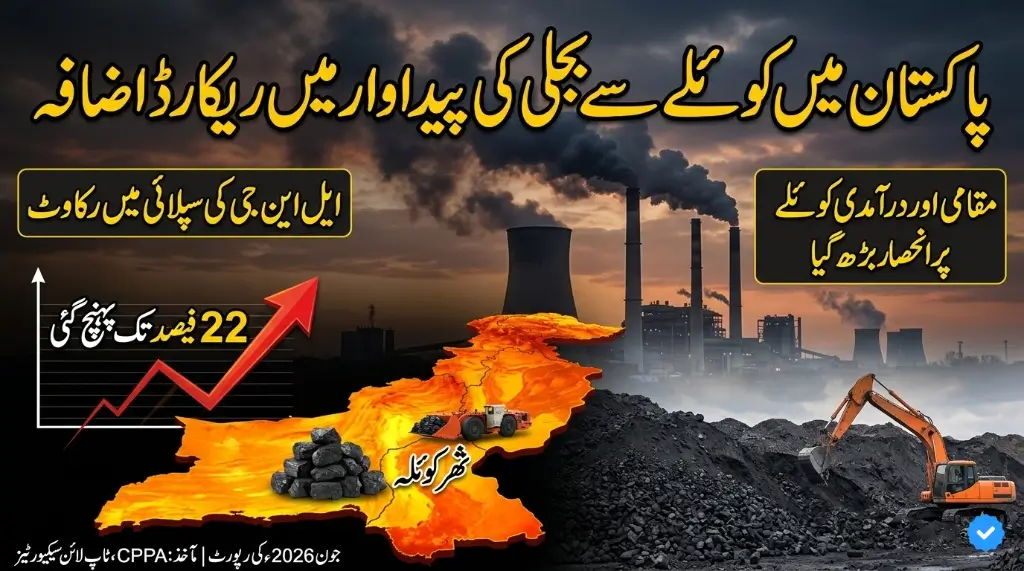
Pakistan’s reliance on coal for electricity generation has reached a record high as disruptions in RLNG supplies forced the country to shift toward imported and local coal-powered plants. According to data released by the Central Power Purchasing.
How to Renew Lahore Driving License in 2026
Agency (CPPA) and compiled by Topline Securities, coal-based electricity generation accounted for 22 percent of Pakistan’s total power generation during the first nine months of FY2026, marking the highest share ever recorded.
RLNG Supply Crisis Pushes Pakistan Toward Coal
کوئلے کے استعمال میں تیزی سے اضافہ ری گیسیفائیڈ لیکویفائیڈ نیچرل گیس (RLNG) کی سپلائی میں شدید رکاوٹوں کے بعد ہوا ہے۔ امریکہ اور ایران کے درمیان جاری کشیدگی، آبنائے ہرمز کی بندش کے ساتھ، عالمی توانائی کی ترسیل میں غیر یقینی صورتحال پیدا ہوئی اور پاکستان میں ایندھن کی دستیابی متاثر ہوئی۔
جیسے ہی آر ایل این جی کی سپلائی سخت اور قیمتیں بڑھنے لگیں، پاکستان نے بجلی کی پیداوار کو بجلی پیدا کرنے اور ملک میں بڑی قلت کے لیے سب سے سستے متبادل متبادل کے طور پر کوئلے سے پاور پاور پلانٹس کا رخ کیا۔
Imported and Thar Coal Projects Gain Importance
Pakistan has invested heavily in coal-based energy projects over the past several years, particularly under the China-Pakistan Economic Corridor (CPEC). Both imported coal plants and Thar coal projects have now become a major part of the country’s electricity generation mix.
The data shows a steady rise in coal’s contribution to Pakistan’s energy sector. In FY2018, coal accounted for only 9.8 percent of electricity generation, while in FY2026 the figure surged to 22 percent. Local coal projects in Thar also recorded increased generation during this period.
Energy Sector Faces Rising Pressure
Pakistan’s energy sector continues to struggle with multiple challenges, including circular debt, high fuel import costs, and unstable global energy markets. While coal has helped bridge the electricity gap in the short term, experts warn that increased dependence on coal could create environmental concerns and higher long-term costs.
The country’s circular debt has already crossed alarming levels, adding further pressure on the government and power sector institutions.
How to Check CNIC Number With Mobile Number
Questions Over Pakistan’s Future Energy Strategy
کوئلے پر بڑھتے ہوئے انحصار نے پاکستان کی طویل مدتی توانائی پالیسی پر بحث کو جنم دیا ہے۔ ایک طرف، ملک کو صنعتوں اور گھرانوں کو سہارا دینے کے لیے سستی اور قابل اعتماد بجلی کی ضرورت ہے۔ دوسری طرف، ماحولیاتی ماہرین پالیسی سازوں پر زور دے رہے ہیں کہ وہ قابل تجدید توانائی کے ذرائع جیسے شمسی، ہوا اور پن بجلی پر زیادہ توجہ دیں۔
Analysts believe Pakistan will need a balanced energy strategy that ensures energy security while reducing dependence on imported fuels and minimizing environmental damage in the years ahead.
5 faqs ho final worlds ka
FAQs
1. Why is Pakistan using more coal for electricity generation?
Pakistan increased coal usage after disruptions in RLNG supplies caused by global energy tensions and the closure of the Strait of Hormuz. Coal became a cheaper and more available option for power generation.
2. What percentage of Pakistan’s electricity now comes from coal?
According to CPPA data, coal-based power generation accounted for 22 percent of Pakistan’s total electricity generation during the first nine months of FY2026.
3. What is the role of Thar coal projects in Pakistan’s energy sector?
Thar coal projects are helping Pakistan reduce reliance on imported fuels by using local coal resources for electricity generation under major energy investments linked to CPEC.
4. How does increased coal usage affect Pakistan’s environment?
Higher coal consumption can increase carbon emissions and air pollution, raising environmental and climate concerns despite helping solve short-term energy shortages.
5. What are the alternatives to coal for Pakistan’s future energy needs?
Experts recommend investing more in renewable energy sources such as solar, wind, and hydropower to reduce fuel import dependence and support sustainable energy growth.
Final Words
Pakistan’s record reliance on coal highlights the growing challenges facing the country’s energy sector amid global fuel supply disruptions and rising electricity demand. While coal has provided short-term relief during the RLNG crisis, the increasing dependence on fossil fuels also raises concerns about environmental impact import costs and long-term sustainability. Moving forward, Pakistan will need a balanced energy strategy that combines affordable electricity generation with greater investment in renewable and cleaner energy sources.