Govt Invites Bids to Privatize
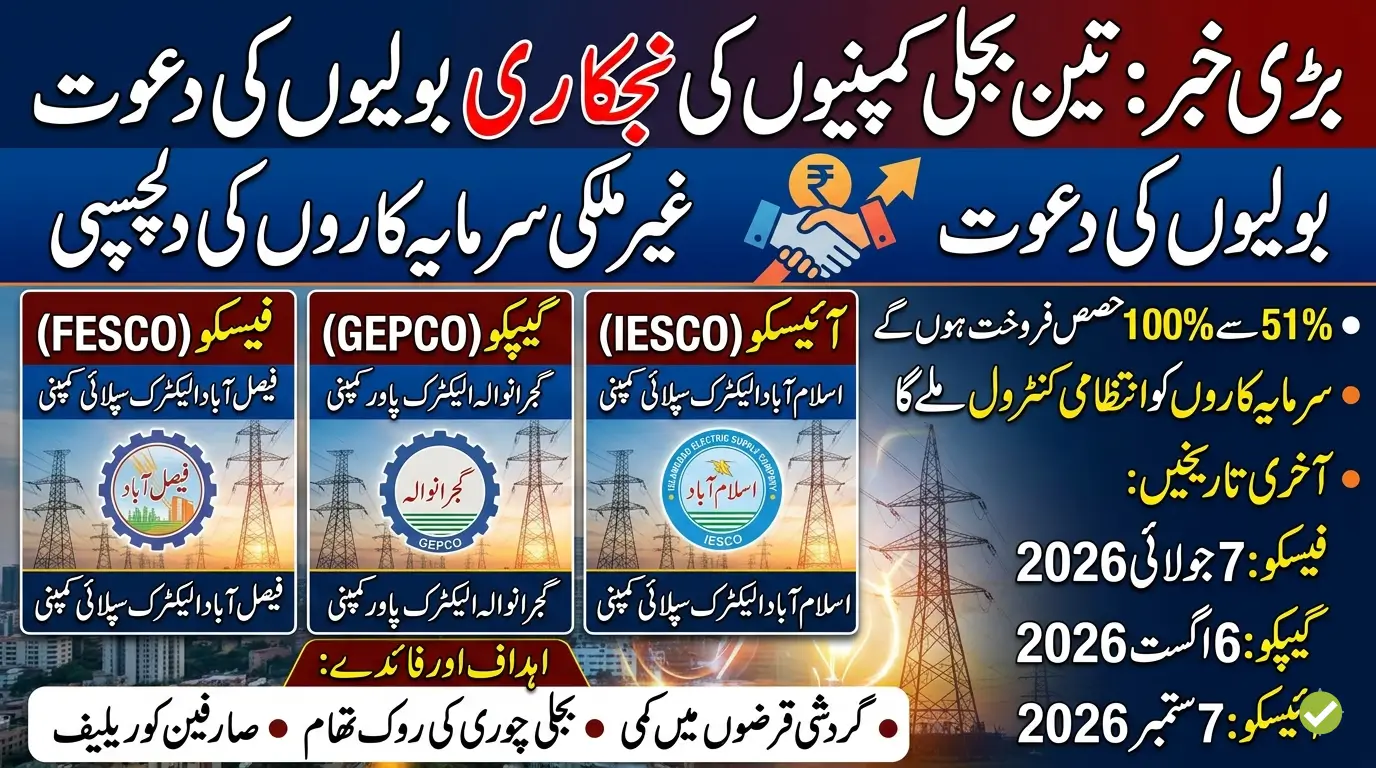
The Government of Pakistan has officially invited investors to participate in the privatization of three major electricity distribution companies, marking an important step in the country’s economic reform efforts. The companies included in this privatization plan are Faisalabad Electric Supply Company (FESCO), Gujranwala Electric Power Company (GEPCO), and Islamabad Electric Supply Company (IESCO).
Power Consumers Across Pakistan Likely to Get Major Relief
The move is part of the government’s broader strategy to improve efficiency in the power sector, attract private investment, and reduce Pakistan’s growing circular debt problem. Officials believe privatization could help modernize electricity distribution systems and improve customer service across different regions of the country.
Government Announces Privatization Plan
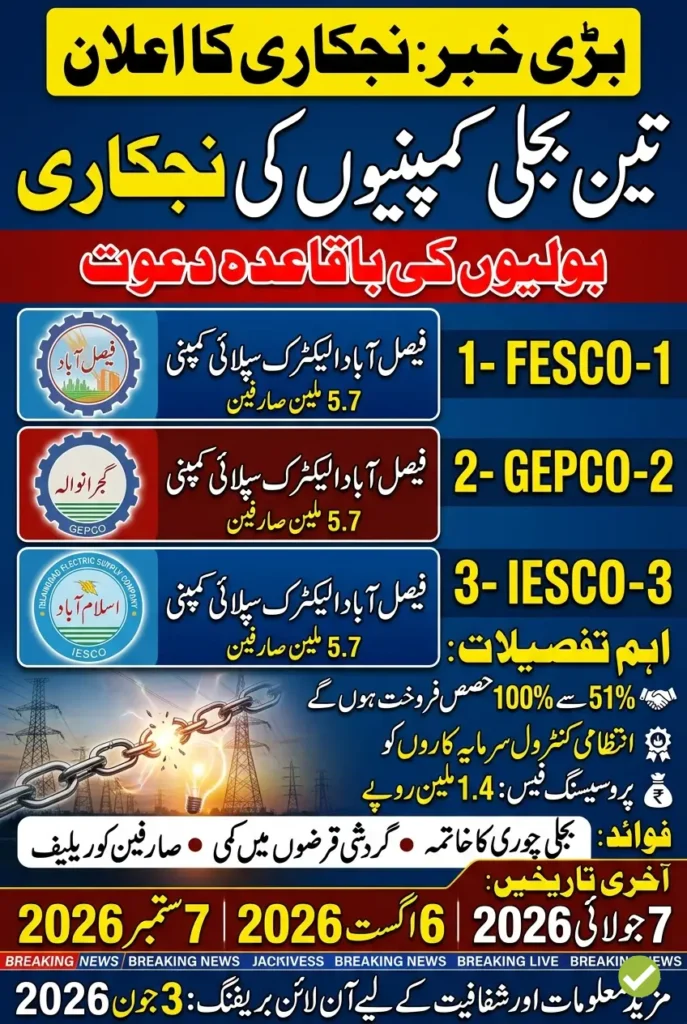
The Government of Pakistan, through the Privatization Commission, has invited Expressions of Interest (EOIs) from local and international investors interested in acquiring stakes in the three electricity distribution companies.
According to reports, the government plans to sell between 51 percent and 100 percent shares in these companies. This means successful investors may gain majority ownership and administrative control over the operations of these electricity providers.
Why the Government Wants Privatization
Pakistan’s electricity sector has faced several long-term problems, including electricity theft, line losses, poor bill recovery, and increasing circular debt. These issues have placed heavy financial pressure on the government and power sector institutions.
Officials believe private investors may bring better management systems, improved technology, and operational efficiency. The government expects privatization to reduce financial losses and improve electricity services for consumers.
New US Move Could Help Pakistan Buy Russian Oil
Administrative Control for Investors
Under the proposed privatization framework, investors will not only receive ownership shares but may also gain administrative control over the companies.
This means private buyers could play a direct role in decision-making, operations, billing systems, and overall management. Experts believe this approach may encourage accountability and improve the performance of electricity distribution companies.
Deadline for Investor Applications
The Privatization Commission has announced separate deadlines for investors interested in each electricity company. For FESCO, the last date to submit expressions of interest is July 7, 2026.
Meanwhile, investors interested in GEPCO can apply until August 6, 2026, while applications for IESCO will remain open until September 7, 2026. These timelines are intended to give investors enough time to prepare proposals.
Processing Fee and Application Requirements
To participate in the privatization process, applicants must submit a non-refundable processing fee of Rs. 1.4 million with each application.
The fee requirement is designed to ensure serious participation from investors. Government officials believe this step will help filter out non-serious applicants and maintain transparency during the privatization process.
Govt Notifies Eid ul Azha Holidays Announces 3rd Eid Day as a Working Day
Online Briefing Session for Investors
To guide potential investors, the Privatization Commission has planned an online briefing session through Zoom on June 3, 2026.
During this session, officials will explain investment procedures, eligibility criteria, documentation requirements, and the overall privatization process. This briefing aims to answer investor concerns and improve transparency.
Importance of FESCO, GEPCO, and IESCO
The three companies selected for privatization serve millions of electricity consumers across Pakistan. FESCO currently supplies electricity to more than 5.7 million consumers in central Punjab.
Similarly, GEPCO provides electricity to Gujranwala, Sialkot, and nearby districts, while IESCO serves Islamabad, Rawalpindi, and parts of Azad Jammu and Kashmir (AJK). Their large customer base makes privatization an important national decision.
Expected Benefits of Privatization
The government expects privatization to improve efficiency, reduce electricity theft, and strengthen bill collection systems. Better operational management could also reduce technical losses and improve electricity supply quality.
In addition, private investment may reduce the burden on government finances and help address Pakistan’s growing circular debt, which remains one of the biggest challenges in the energy sector.
Punjab University Summer Vacation Schedule Announced 2026
Concerns and Public Reaction
Despite expected benefits, privatization may also raise concerns among workers and consumers. Employees may worry about job security, while consumers could question whether electricity prices may increase under private ownership.
Experts argue that strong regulatory oversight will be necessary to ensure private companies prioritize service quality while protecting consumer rights and maintaining affordable electricity access.
Final Words
The government’s decision to privatize FESCO, GEPCO, and IESCO represents a major reform effort in Pakistan’s electricity sector. By inviting investors and offering administrative control, authorities hope to improve efficiency and reduce financial losses.
While privatization may bring investment and operational improvements, its success will depend on transparent implementation, proper regulation, and consumer protection. The coming months will reveal how investors respond to this major opportunity.
FAQs
1. Which electricity companies are being privatized?
The government plans to privatize FESCO, GEPCO, and IESCO.
2. How many shares will the government sell?
The government may sell between 51 percent and 100 percent shares.
3. Will investors get management control?
Yes, successful investors may also receive administrative control of the companies.
4. What is the application fee for investors?
Applicants must submit a non-refundable fee of Rs. 1.4 million.
5. Why is the government privatizing these companies?
The government aims to improve efficiency, attract investment, and reduce circular debt in the power sector.
96% Solar Adoption in Pakistan Self-Financed by Consumers, Not Government or Banks