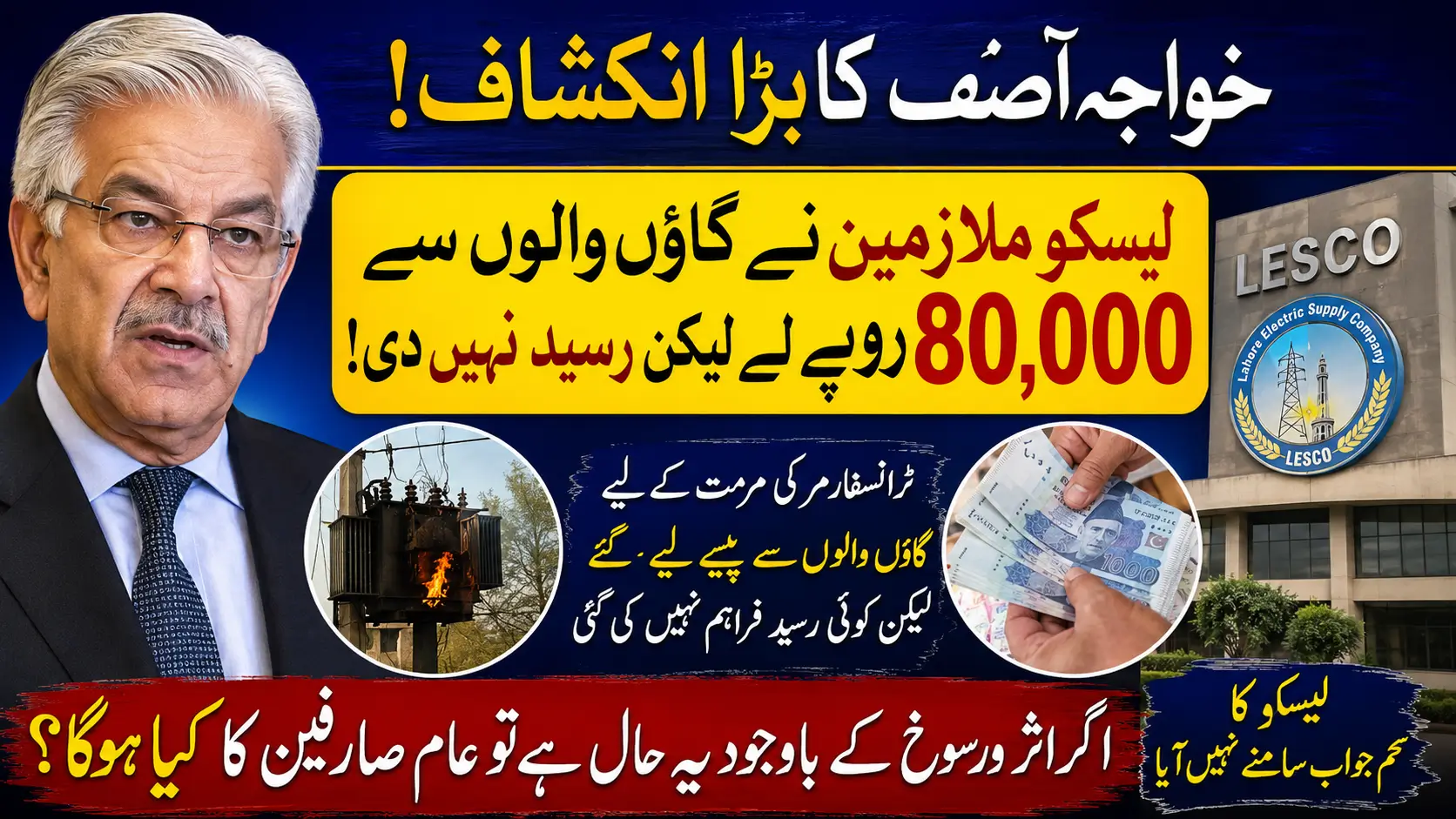
Khawaja Asif Alleges LESCO Staff Took Rs. 80,000 for Transformer Repair Without Receipt
Khawaja Asif Alleges LESCO Staff
The issue of transparency and accountability in Pakistan’s power distribution system has once again come under discussion after Defense Minister Khawaja Muhammad Asif publicly highlighted an incident involving the Lahore Electric Supply Company LESCO. According to the minister, employees of the company allegedly collected Rs. 80,000 from villagers for the repair of a damaged transformer but did not provide any official receipt for the payment. The matter has sparked debate about service delivery, public trust, and the challenges consumers face when dealing with utility providers.
Punjab Govt Approves Summer Camps for Public
The allegations were shared by Khawaja Asif through a post on the social media platform X. In his statement, he described an incident that took place in the village of one of his domestic workers. A transformer serving the area reportedly burned out leaving residents in need of urgent repairs. To help resolve the issue, the minister said he contacted a former chief executive of LESCO and requested assistance in restoring electricity to the affected community.
وزیر دفاع خواجہ محمد آصف نے لاہور الیکٹرک سپلائی کمپنی (لیسکو) کے بعض ملازمین پر سنگین الزامات عائد کرتے ہوئے بجلی کے نظام میں شفافیت اور احتساب سے متعلق سوالات اٹھا دیے ہیں۔ ان کے مطابق ان کے گھریلو ملازم کے گاؤں میں ایک ٹرانسفارمر جل گیا تھا، جس کی مرمت کے لیے لیسکو کے عملے نے مقامی لوگوں سے مجموعی طور پر 80 ہزار روپے وصول کیے۔ تاہم، مبینہ طور پر اس رقم کی کوئی سرکاری رسید جاری نہیں کی گئی، جس کے باعث معاملہ عوامی توجہ کا مرکز بن گیا ہے۔
خواجہ آصف کا کہنا ہے کہ جب گاؤں والوں نے ادائیگی کی رسید مانگی تو متعلقہ حکام نے اسے فراہم کرنے سے انکار کر دیا۔ انہوں نے اس واقعے کو عام صارفین کے لیے تشویش ناک قرار دیتے ہوئے کہا کہ اگر ایسے مسائل بااثر افراد کی سفارش کے باوجود پیش آ سکتے ہیں تو عام شہریوں کو مزید مشکلات کا سامنا کرنا پڑ سکتا ہے۔ تاحال لیسکو کی جانب سے ان الزامات پر کوئی باضابطہ ردعمل سامنے نہیں آیا، جبکہ یہ معاملہ بجلی کی تقسیم کار کمپنیوں میں شفافیت اور عوامی اعتماد کے حوالے سے نئی بحث چھیڑ رہا ہے۔
What Happened in the Village?
According to the information shared by Khawaja Asif, LESCO workers eventually repaired the damaged transformer. However, local residents were allegedly asked to contribute money for the repair work. Villagers reportedly collected funds among themselves and paid a total of Rs. 80,000 to the workers involved in the repair process.
The key concern raised by the defense minister was not only the collection of money but also the absence of any official documentation. He claimed that no receipt was issued to the villagers after the payment was made. Furthermore, he alleged that when residents later requested a receipt, company officials refused to provide one despite the amount having already been paid in full.
The allegations have generated significant attention because they involve a public utility company responsible for providing essential services to millions of consumers. Questions have been raised about whether such payments are officially authorized and what procedures should be followed when communities contribute funds for emergency repairs.
Khawaja Asif’s Concerns About Consumer Rights
In his public statement, Khawaja Asif expressed concern about the difficulties ordinary citizens may face when dealing with utility providers. He suggested that if such issues could occur even after a recommendation from a former power minister and a sitting cabinet member, regular consumers without influential contacts might encounter even greater challenges.
His remarks focused on the broader issue of accountability within public institutions. Consumers generally expect transparency when making payments related to utility services. Official receipts and documented transactions are considered important safeguards that help ensure payments are properly recorded and reduce the risk of financial irregularities.
The minister’s comments have led many observers to call for a thorough review of the matter. Transparency advocates argue that all payments collected for public services should be properly documented so that consumers can verify where their money is being used and whether charges are officially approved.
Importance of Receipts in Public Service Transactions
Receipts play a crucial role in maintaining trust between service providers and consumers. Whenever money is collected for repairs, maintenance, or other services, official documentation helps establish a clear record of the transaction. This protects both the organization providing the service and the individuals making the payment.
Without receipts, consumers may face difficulties proving that a payment was made. In some cases, a lack of documentation can create confusion regarding the purpose of the payment or whether the amount collected was authorized. For this reason, government departments and public service organizations generally have procedures in place to record financial transactions.
The allegations highlighted by Khawaja Asif have therefore drawn attention not only because of the amount involved but also because of the broader questions surrounding transparency and accountability in utility operations.
LESCO Yet to Respond Publicly
At the time of reporting, LESCO had not issued an official public response to the allegations made by the defense minister. As a result, the company’s position on the matter remains unclear. It is possible that an internal review or investigation may be conducted if the issue receives further attention from authorities.
Public responses from utility companies are often important in situations where allegations of financial irregularities arise. Such responses can help clarify whether the actions described were consistent with company policies or whether corrective measures may be required.
Until an official statement is released, the claims remain allegations that have been raised publicly by a senior government official. Any conclusions regarding responsibility would depend on the findings of relevant authorities or investigations.
Broader Impact on Public Confidence
Incidents involving public utilities can have a significant impact on public confidence. Electricity distribution companies provide services that are essential for households, businesses, schools, and healthcare facilities. As a result, consumers expect high standards of professionalism and transparency.
When questions arise about payment procedures or service delivery, they can influence public perceptions of the institution involved. Experts often emphasize the importance of clear communication, documented transactions, and effective complaint-handling mechanisms to maintain consumer trust.
The transformer repair case highlighted by Khawaja Asif has therefore become more than a local issue. It has opened a wider discussion about how public utility organizations can strengthen accountability and ensure that consumers feel protected when paying for services.
FAQs
1. What allegation did Khawaja Asif make against LESCO employees?
He alleged that LESCO workers collected Rs. 80,000 from villagers for transformer repairs but did not provide an official receipt for the payment.
2. Where did the reported incident occur?
The incident reportedly occurred in the village of one of Khawaja Asif’s domestic workers after a transformer serving the area burned out.
3. Why is the absence of a receipt important?
Receipts provide proof of payment and help ensure transparency, accountability, and proper financial record-keeping.
4. Has LESCO responded to the allegations?
As of now, LESCO has not issued a public response regarding the claims made by the defense minister.
5. Are the allegations officially proven?
No. The claims have been made publicly by Khawaja Asif, but no official investigation findings or conclusions have been announced so far.
Punjab Kisan Card Registration Full Process Explained 2026
Final Words
The allegations raised by Defense Minister Khawaja Muhammad Asif have brought renewed attention to issues of transparency and accountability within Pakistan’s power distribution system. The reported collection of Rs. 80,000 without an official receipt has sparked public discussion about consumer rights and the importance of documented financial transactions. While LESCO has not yet responded publicly, the incident highlights the need for clear procedures and accountability measures that protect both service providers and consumers. As further information emerges, many observers will be watching closely to see whether the matter leads to an official inquiry or policy improvements within the utility sector.

Leave a Reply