IMF Predicts Higher Inflation
The International Monetary Fund (IMF) has revised Pakistan’s economic outlook after completing the third review of the country’s ongoing financial program. The updated projections suggest that Pakistan may face slower economic growth, higher inflation, increased external sector pressure, and lower foreign exchange reserves during fiscal year 2026-27. Economists believe these revised estimates reflect growing concerns about global oil prices, external debt obligations, and overall economic uncertainty.
Pakistan Announces Official 4-Day Eid-ul-Fitr Holidays 2026 Government
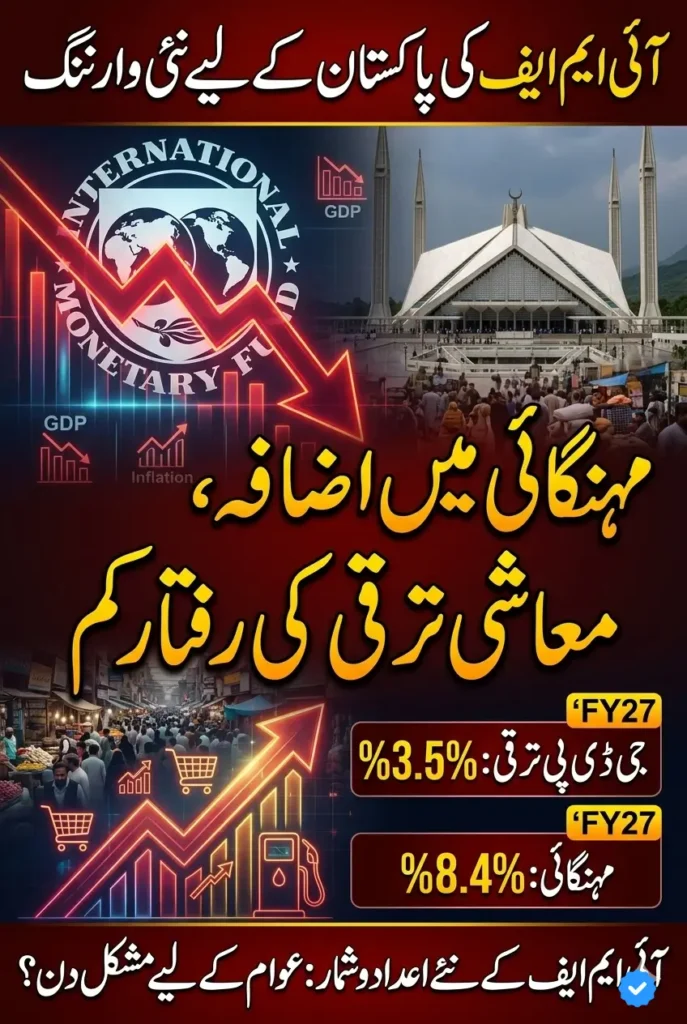
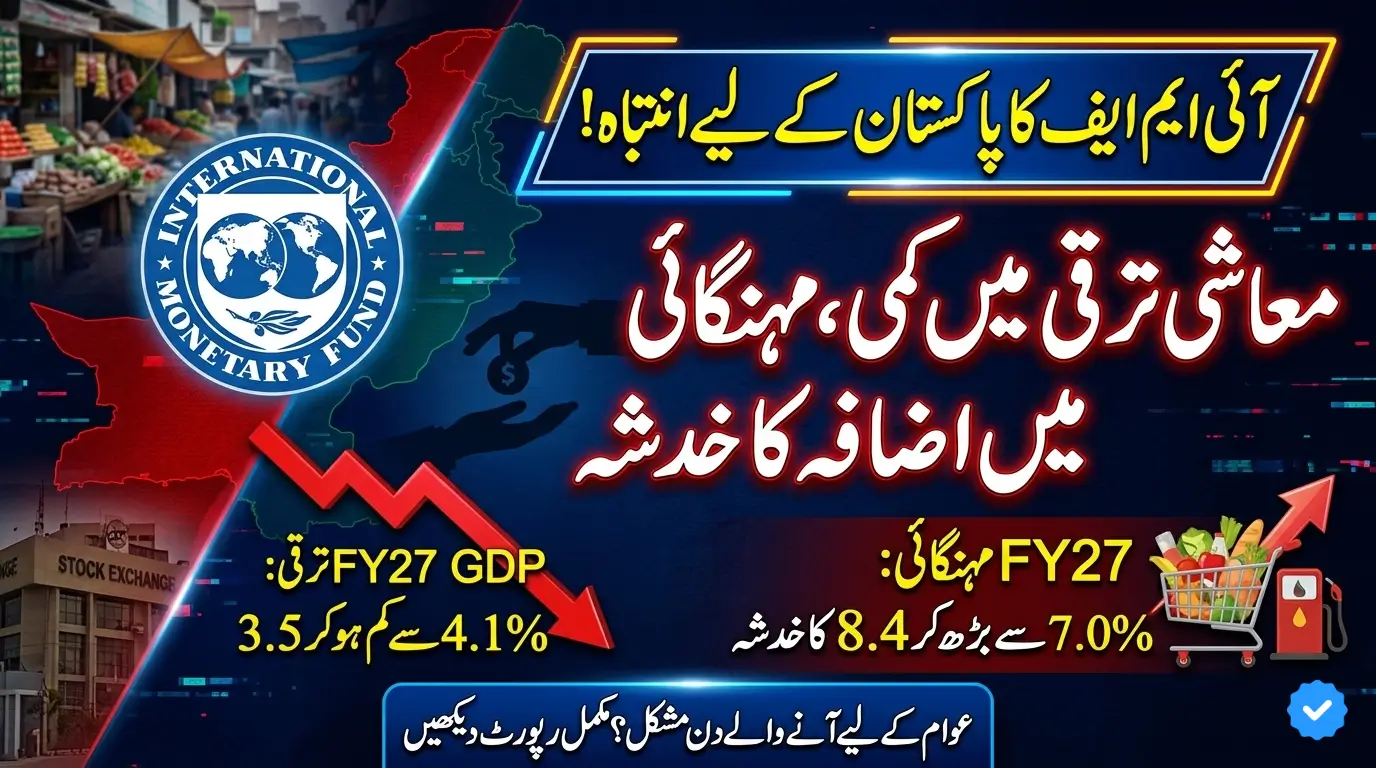
According to the IMF’s latest assessment, Pakistan’s GDP growth forecast for FY27 has been reduced from 4.1 percent to 3.5 percent. At the same time, inflation expectations have been raised from 7 percent to 8.4 percent. The IMF has also projected a wider current account deficit and lower reserve accumulation, indicating that the country’s economic recovery may remain under pressure in the coming years.
IMF Revises Pakistan’s Economic Growth Outlook
Economic growth is one of the most important indicators of a country’s financial health because it reflects industrial activity, business expansion, employment opportunities, and consumer spending. A lower GDP growth forecast generally indicates slower economic activity and weaker investment trends.
For FY27, the IMF expects Pakistan’s economy to grow at 3.5 percent instead of the earlier estimate of 4.1 percent. However, the organization slightly improved its GDP growth projection for the current fiscal year FY26, revising it upward from 3.2 percent to 3.6 percent.
Pakistan Inflation Forecast Increased
The IMF has also revised Pakistan’s inflation outlook upward for both FY26 and FY27. Inflation for FY27 is now expected to reach 8.4 percent, compared to the previous estimate of 7 percent. Similarly, inflation expectations for FY26 were increased from 6.3 percent to 7.2 percent.
Higher inflation can directly affect the prices of food items, fuel, electricity, transportation, and daily household products. Rising inflation also reduces purchasing power, making it difficult for middle-class and lower-income families to manage living expenses.
IMF Economic Forecast Comparison Table
| Economic Indicator | Previous Forecast | Revised Forecast |
|---|---|---|
| FY27 GDP Growth | 4.1% | 3.5% |
| FY27 Inflation | 7.0% | 8.4% |
| FY27 Current Account Deficit | 0.4% of GDP | 0.9% of GDP |
| FY27 Foreign Exchange Reserves | $23.3 Billion | $20.9 Billion |
| FY26 GDP Growth | 3.2% | 3.6% |
| FY26 Inflation | 6.3% | 7.2% |
Current Account Deficit and Reserve Pressure
The IMF has projected Pakistan’s current account deficit at 0.9 percent of GDP for FY27, compared with its earlier estimate of 0.4 percent. The current account deficit represents the gap between the country’s foreign income and spending on imports and international obligations.
At the same time, foreign exchange reserve projections have also been lowered. The IMF now expects Pakistan’s reserves to reach $20.9 billion by the end of FY27 instead of the previously projected $23.3 billion. Lower reserves can place additional pressure on the Pakistani rupee and create uncertainty in financial markets.
Rising Oil Prices Remain a Major Concern
Global oil prices continue to be one of the biggest risks for Pakistan’s economy. Since Pakistan imports a large amount of petroleum products, higher international oil prices can increase fuel costs, transportation expenses, electricity tariffs, and industrial production costs.
The IMF believes that expensive oil imports could slow economic growth, increase inflation, and make it harder for Pakistan to strengthen its external account position. Higher oil prices may also force the government to maintain strict fiscal policies under the IMF program.
Punjab Rehmat Card Last Date May 2026 Complete Apply Guide
Government Commitment to Fiscal Discipline
Despite the weaker economic outlook, Pakistan has maintained its commitment to fiscal discipline. According to IMF projections, the primary surplus target for FY27 remains unchanged at 2 percent of GDP, while the FY26 target stays at 1.6 percent.
Maintaining a primary surplus means the government aims to keep revenues higher than non-interest expenditures. This policy is considered important for reducing debt pressure and improving financial stability, although it may require strict spending controls and economic reforms.
Challenges Facing Pakistan’s Economy
Pakistan’s economy continues to face multiple challenges, including:
- High inflation
- Rising fuel prices
- Currency depreciation risks
- External debt repayments
- Slow industrial growth
- Import dependency
- Energy sector issues
- Global economic uncertainty
Economic experts believe that long-term reforms, export growth, investment promotion, and energy sector improvements will be necessary to stabilize the economy and support sustainable growth.
SEO Keywords
- IMF Pakistan Report 2026
- Pakistan GDP Growth Forecast
- Pakistan Inflation Rate
- IMF Economic Outlook Pakistan
- Pakistan Current Account Deficit
- Foreign Exchange Reserves Pakistan
- Pakistan Economy News
- IMF Loan Program Pakistan
- Pakistan Fiscal Policy
- Pakistan Economic Forecast FY27
FAQs
What GDP growth rate has the IMF projected for Pakistan in FY27?
The IMF has projected Pakistan’s GDP growth at 3.5 percent for FY27.
What is the new inflation forecast for Pakistan?
The IMF expects inflation to reach 8.4 percent during FY27.
Why did the IMF lower Pakistan’s growth forecast?
The forecast was revised due to rising oil prices, external sector pressures, and slower economic activity.
What are the projected foreign exchange reserves for FY27?
Pakistan’s reserves are expected to reach $20.9 billion by the end of FY27.
What is the projected current account deficit?
The IMF expects Pakistan’s current account deficit to reach 0.9 percent of GDP in FY27.
Final Words
The IMF’s revised projections highlight the economic challenges Pakistan may continue facing over the next fiscal year. While the country has shown some signs of stabilization, inflationary pressure, slower growth, and external financing risks remain major concerns.
Govt Could Raise Petrol Prices Again This Week As Brent Nears $110 per