Pakistan has taken a major step toward reviving the long-delayed Tuwairqi Steel Mills project, which remained inactive for nearly twenty years. The government recently approved the supply of natural gas to the Saudi-backed steel plant, creating fresh hope that one of Pakistan’s largest industrial investments may finally begin commercial operations. This decision was made by the Economic Coordination Committee (ECC) after years of delays and policy discussions regarding gas allocation.
Power Consumers Across Pakistan Likely to Get Major Relief
The revival of this steel project is considered highly important for Pakistan’s industrial sector because steel production plays a major role in infrastructure development, construction, and manufacturing. If the project becomes operational, it may help Pakistan reduce steel imports, create employment opportunities, and strengthen the national economy. The decision also reflects the government’s efforts to attract foreign investment and restart stalled industrial projects.
Background of the Tuwairqi Steel Project
The Tuwairqi Steel Mills project was first planned in 2004 and officially launched in 2006 during the government of former President Pervez Musharraf. At that time, the project was seen as one of Pakistan’s largest foreign direct investments in the industrial sector. The steel complex was designed to become the country’s largest private steel manufacturing facility.
Despite major expectations and significant investment, the project could not become fully operational. One of the biggest challenges was disagreement over the supply of gas at affordable or concessional rates. Since steel production requires a large amount of natural gas, the absence of reliable energy supply made commercial operations impossible for years.
ECC Approves Gas Supply for Revival
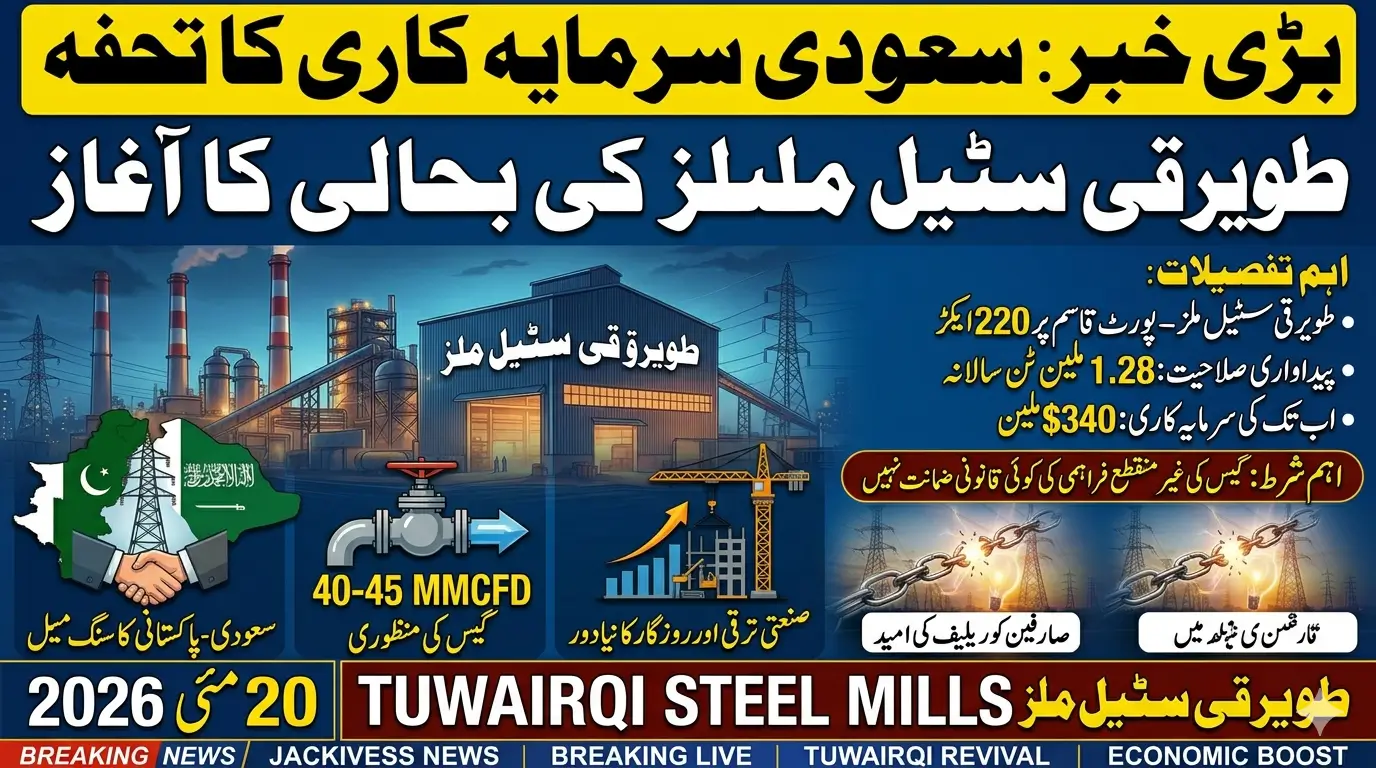
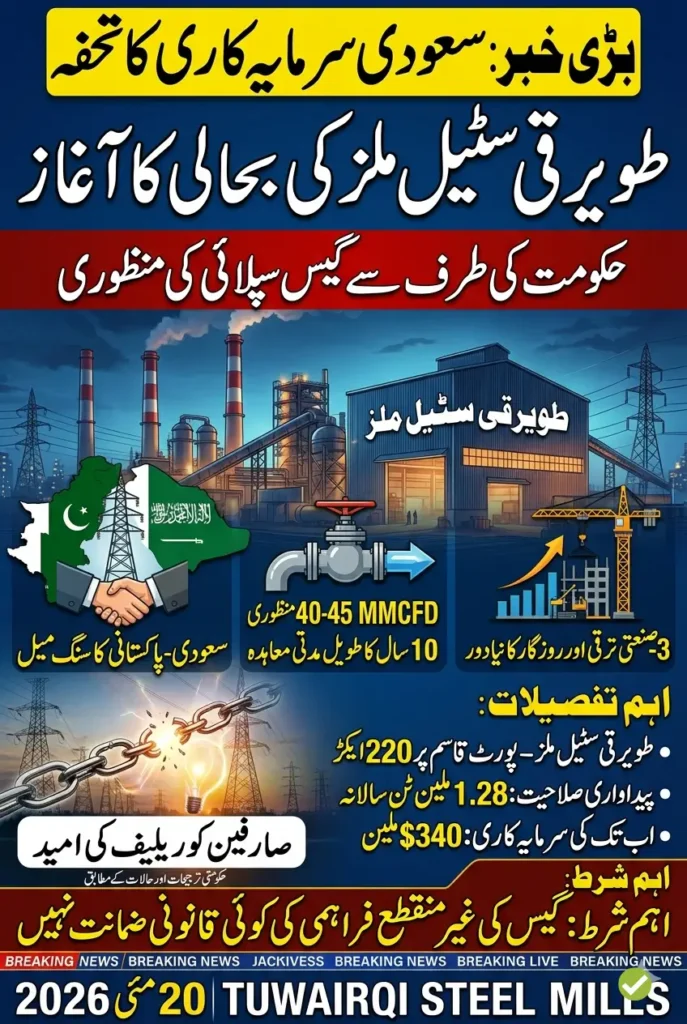
In the latest development, the Economic Coordination Committee (ECC) approved the supply of approximately 40 to 45 million cubic feet per day (MMCFD) of gas for the steel complex. This approval is considered a major breakthrough because natural gas is a critical requirement for steel manufacturing operations.
However, the ECC also clarified an important point: the government will not be legally responsible for uninterrupted gas supply. Officials stated that gas availability will depend on national priorities, supply conditions, and overall economic circumstances. This means the project may still face challenges if gas shortages occur in the future.
New US Move Could Help Pakistan Buy Russian Oil
Role of the Special Investment Facilitation Council
The Special Investment Facilitation Council (SIFC) played an important role in reviving the steel project. The council actively supported restarting the National Steel Complex and recommended providing long-term gas supply to improve investor confidence.
The SIFC reportedly suggested the allocation of up to 50 million cubic feet per day of gas, competitive industrial tariffs, and a separate pricing category for large industrial consumers. These recommendations were aimed at making the steel complex financially sustainable and attractive for investors.
Changes in Pakistan’s Gas Allocation Policy
The government has also introduced important changes to the national gas allocation policy. Under the revised framework, industrial consumers have now been placed among high-priority categories for gas supply along with domestic and commercial sectors.
Because of these policy changes, the National Steel Complex now qualifies for gas allocation. The ECC also decided that all future industrial requests exceeding 10 million cubic feet per day of gas will require committee approval to ensure proper management of national energy resources.
Long-Term Gas Supply Agreement
According to reports, the Sui Southern Gas Company (SSGC) has been directed to provide a reliable 10-year gas supply agreement to the steel project. The agreement may also include an option to extend gas supply for another ten years if needed.
A long-term energy agreement is considered essential for heavy industries like steel manufacturing because investors require stable energy access before committing to large production activities. Reliable gas supply may encourage confidence among investors and management teams.
Govt Notifies Eid ul Azha Holidays Announces 3rd Eid Day as a Working Day
Foreign Investment and International Partnerships
The Tuwairqi Steel project is backed by Saudi Arabia’s Al Tuwairqi Holding, making it one of Pakistan’s major Saudi-supported industrial ventures. Later, South Korea’s POSCO also joined the project, bringing additional expertise and financial support.
Reports suggest that approximately US$340 million was invested during the first phase of the project. This made Tuwairqi Steel one of Pakistan’s biggest foreign-funded industrial developments at the time of its launch.
Production Capacity and Industrial Importance
Located on approximately 220 acres at Port Qasim, the steel complex was designed to produce around 1.28 million tonnes of Direct Reduced Iron (DRI) every year. This production capacity could significantly support Pakistan’s steel requirements.
If operational, the project may help reduce dependence on imported steel products and improve industrial productivity. Increased domestic steel production may also benefit construction projects, infrastructure development, and manufacturing industries across Pakistan.
Economic Benefits for Pakistan
The successful revival of Tuwairqi Steel Mills could bring multiple benefits to Pakistan’s economy. It may create thousands of direct and indirect job opportunities while also supporting related industries such as transportation, logistics, and construction.
In addition, restarting such a large foreign-backed project may improve investor confidence and encourage more international companies to invest in Pakistan. Industrial growth often plays a major role in strengthening exports and boosting economic stability.
Final Words
The government’s decision to revive the Saudi-backed Tuwairqi Steel Mills project after nearly two decades is an important development for Pakistan’s industrial future. With ECC approval for gas supply and support from the SIFC, the project now has a stronger chance of becoming operational.
Although challenges related to gas availability still remain, the revival of the steel complex could create jobs, attract investment, reduce steel imports, and support industrial growth. If implemented successfully, this project may become a major milestone in Pakistan’s economic development.
Punjab University Summer Vacation Schedule Announced 2026
FAQs
1. Why did Tuwairqi Steel Mills remain inactive?
The project remained inactive mainly because of disputes over affordable gas supply needed for steel production.
2. How much gas has been approved for the project?
The ECC approved approximately 40 to 45 million cubic feet per day of natural gas.
3. Who owns the Tuwairqi Steel project?
The project is backed by Saudi Arabia’s Al Tuwairqi Holding with support from South Korea’s POSCO.
4. Where is Tuwairqi Steel Mills located?
The steel complex is located at Port Qasim, Karachi, covering around 220 acres.
5. How much steel can the plant produce annually?
The project was designed to produce around 1.28 million tonnes of Direct Reduced Iron annually.