Rupee Up Rs. 4 Against Pound After Britain
The Pakistani rupee (PKR) continued its positive momentum against the US Dollar on Friday, extending its winning streak for the 161st consecutive day in the interbank market. The local currency also posted gains against all other major international currencies during the trading session.
Everything Pakistan Has Promised the IMF Until 2027
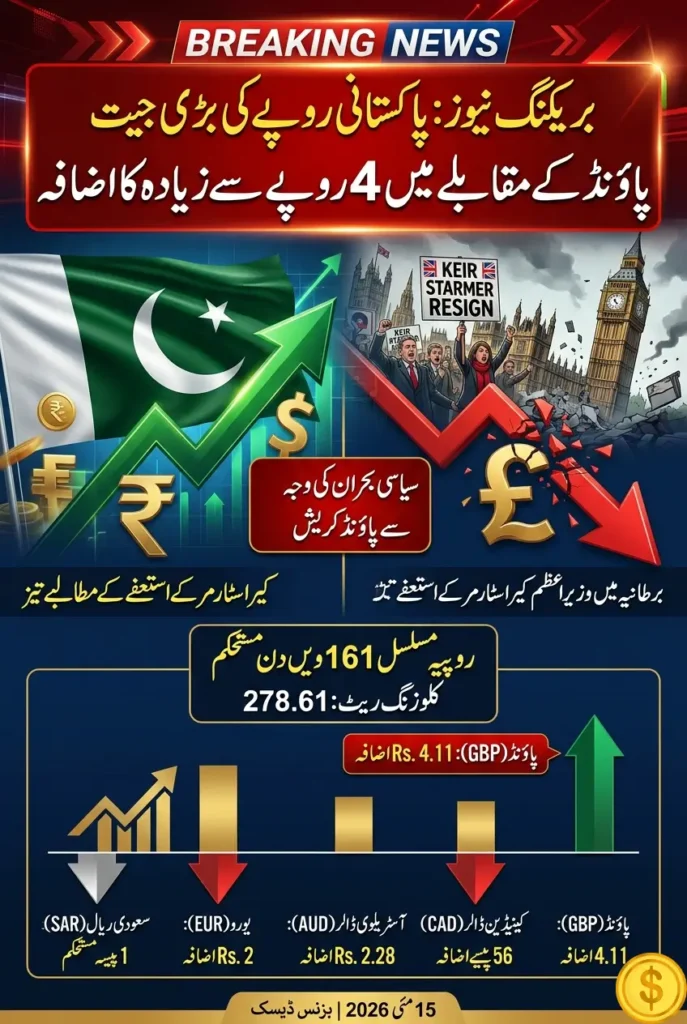
According to market data, the rupee closed at 278.61 against the US Dollar after gaining one paisa during the day. Currency dealers said stable foreign exchange reserves, controlled import pressure, and improved market confidence helped support the local currency.
British Pound Suffers Major Decline
The biggest movement in the currency market was seen against the British Pound. The Pakistani rupee gained Rs. 4.11 against the Pound after political uncertainty intensified in the United Kingdom.
Calls for British Prime Minister Keir Starmer’s resignation reportedly increased, putting pressure on the Pound in international currency markets. Political instability often weakens investor confidence, which can directly impact a country’s currency value.
Rupee Gains Against Euro And Other Currencies
Apart from the Pound, the rupee also strengthened against several other global currencies. It gained Rs. 2 against the Euro during Friday’s trading session.
The local currency also improved against the Australian Dollar, Malaysian Ringgit, Chinese Yuan, and Canadian Dollar. Currency experts said global market movements and fluctuations in international investor sentiment influenced exchange rates throughout the day.
Pakistan’s Investment-to-GDP Ratio Still Below Critical Level Like Last Year
PKR Remains Stable Against Gulf Currencies
The Pakistani rupee remained mostly stable against Gulf currencies including the UAE Dirham and Saudi Riyal. It gained one paisa against the Saudi Riyal while showing very little movement against the UAE Dirham.
Stability against Gulf currencies is considered important because Pakistan receives a large amount of remittances from overseas workers living in Saudi Arabia and the UAE.
Currency Market Performance
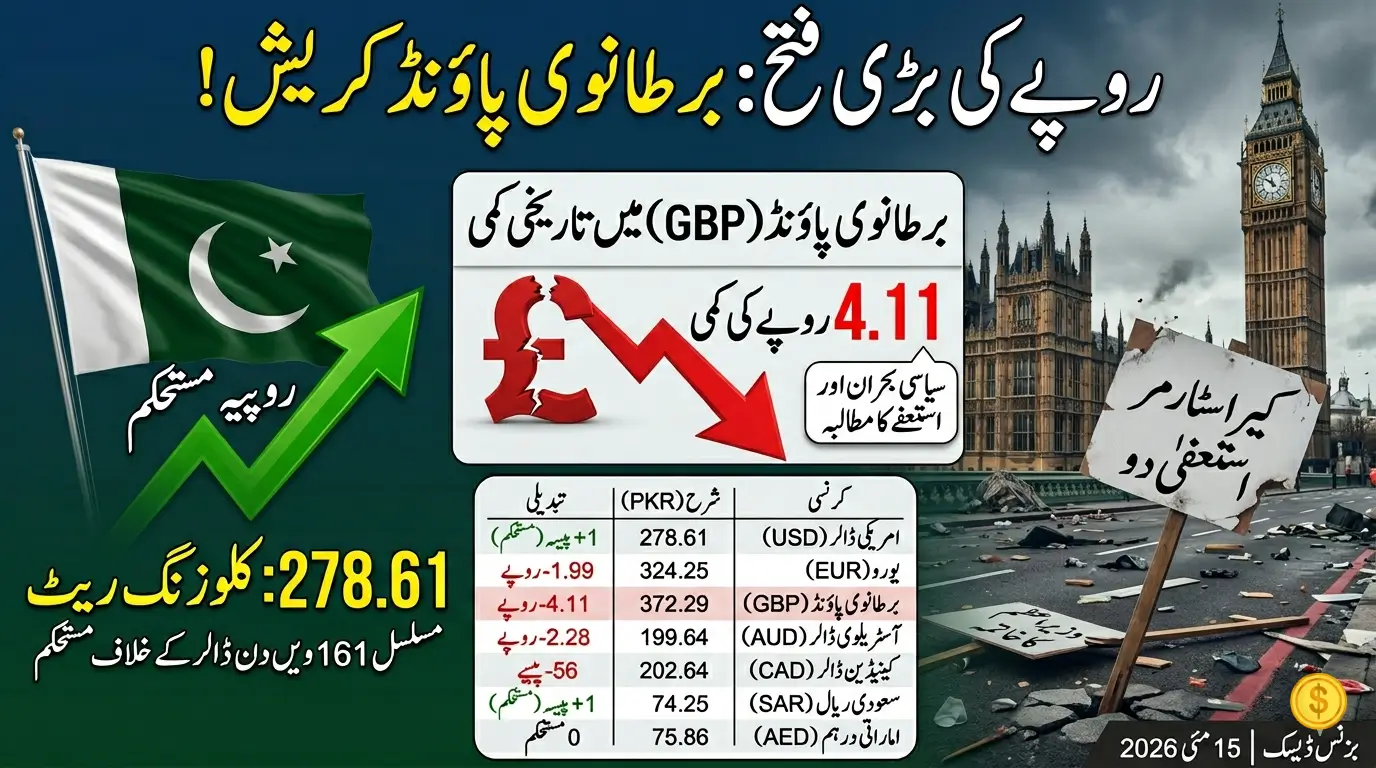
According to the latest interbank closing rates, the Pakistani rupee performed as follows:
- US Dollar (USD): Closed at 278.61 after gaining one paisa
- British Pound (GBP): PKR gained Rs. 4.11
- Euro (EUR): PKR gained Rs. 1.99
- Australian Dollar (AUD): PKR gained Rs. 2.28
- Canadian Dollar (CAD): PKR gained 56 paisas
- UAE Dirham (AED): Mostly stable
- Saudi Riyal (SAR): PKR gained one paisa
Market analysts believe the rupee’s stability is currently being supported by tighter import controls, improved remittance flows, and stable foreign exchange management by financial authorities.
Punjab Govt Relaxes Early Closure Timings for Businesses
Political Uncertainty Impacts British Pound
The sharp fall in the British Pound came after reports of growing political pressure on Prime Minister Keir Starmer. International investors closely monitor political developments because leadership uncertainty can create economic concerns and affect investor confidence.
Currency traders noted that the Pound weakened globally during the day, which helped the Pakistani rupee record strong gains against the British currency.
Global political events often have a direct impact on exchange rates, especially for currencies like the Pound and Euro that are heavily traded in international markets.
Analysts Watching Dollar Trend Closely
Although the rupee gained only one paisa against the US Dollar, analysts believe maintaining stability against the Dollar remains important for Pakistan’s economy.
A stable exchange rate helps control imported inflation, supports business confidence, and reduces pressure on foreign debt repayments. However, experts say Pakistan’s currency market remains sensitive to global oil prices, foreign reserves, and IMF-related developments.
Future movement of the rupee will likely depend on external financing inflows, trade performance, and economic policy decisions in the coming months.
FBR Unable to Explain Math Behind Sale of Sezied Dry Milk At Huge Discount
Investors Remain Focused On Economic Stability
Financial experts believe investor confidence in Pakistan’s currency market has improved compared to previous years. However, they warn that maintaining long-term stability will require continued fiscal discipline, export growth, and stable foreign exchange reserves.
The government and State Bank of Pakistan are expected to continue monitoring market conditions closely to avoid excessive volatility in the currency market.
FAQs
1. How much did the Pakistani rupee gain against the British Pound?
The Pakistani rupee gained Rs. 4.11 against the British Pound during Friday’s trading session.
2. What was the closing rate of the US Dollar?
The US Dollar closed at Rs. 278.61 in the interbank market.
3. Why did the British Pound weaken?
The Pound weakened after political uncertainty increased in Britain and calls for Prime Minister Keir Starmer’s resignation intensified.
4. Did the rupee gain against other currencies as well?
Yes, the rupee gained against the Euro, Australian Dollar, Canadian Dollar, and several other major currencies.
5. Why is rupee stability important for Pakistan?
A stable rupee helps control inflation, supports imports and exports, and reduces pressure on foreign debt repayments.
Final Words
The Pakistani rupee’s continued stability against the US Dollar and strong gains against other major currencies reflect improving market confidence and favorable external conditions. The sharp decline in the British Pound due to political uncertainty provided additional support to the rupee during Friday’s session. However, experts believe maintaining long-term currency stability will depend on economic reforms, foreign exchange reserves, and global market conditions in the months ahead.
India Increases Petrol and Diesel Prices After 4 Years Amid Oil Import Crisis