Govt Moves to Bring More Public
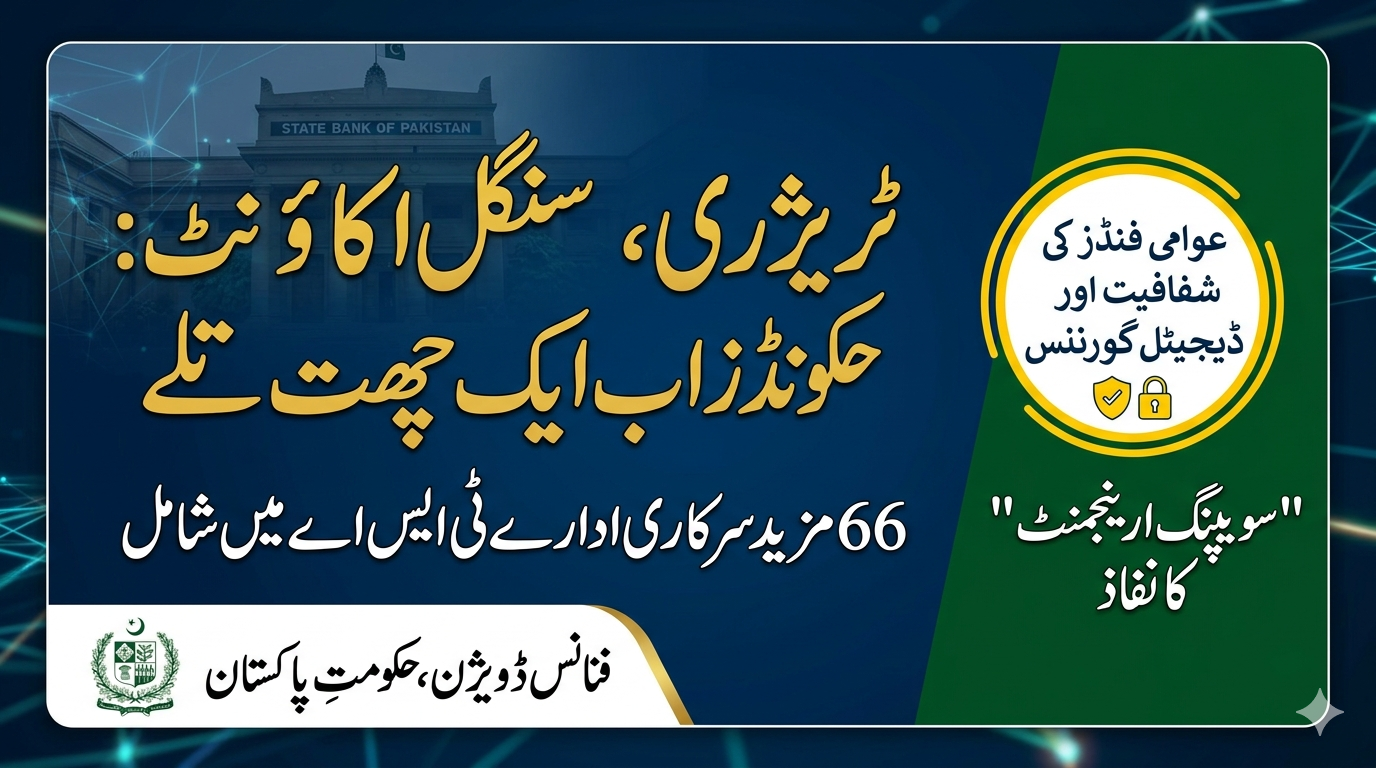
Pakistan has accelerated efforts to strengthen its public financial management system by expanding the Treasury Single Account (TSA) framework across more government institutions. The move is part of a broader strategy to improve transparency, financial discipline and digital governance in the public sector. According to a recent notification issued by the Finance.
Constitutional Court Declares Section 7E Unconstitutional in Major Relief
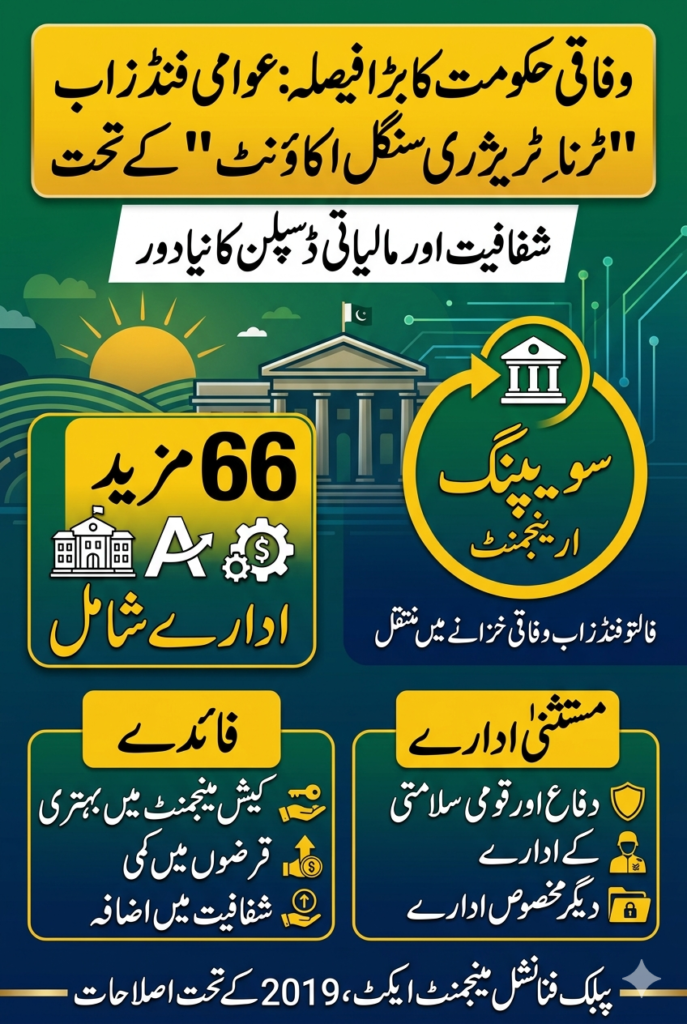
The Treasury Single Account system is considered one of the most important reforms introduced under the Public Finance Management Act, 2019. The system allows the government to manage all receipts and payments through a unified account structure linked directly with the federal consolidated fund. Instead of allowing multiple government departments and institutions to maintain separate bank accounts with idle balances.
What Is the Treasury Single Account System?
The Treasury Single Account is a centralized banking arrangement that enables the government to monitor and control public finances more effectively. Under the old system, many ministries, authorities, regulators, universities and public sector organizations maintained separate bank accounts in commercial banks. This often created problems related to delayed reporting, inefficient cash management, and lack of transparency in the movement of public funds.
The TSA system aims to solve these issues by bringing government cash resources under a single umbrella managed through the State Bank of Pakistan. Through this arrangement the government can track cash flows in real time reduce unnecessary borrowing, and improve accountability across public institutions.
Petrol Price Likely to Rise Again This Week
More Public Entities Being Included
According to the Finance Ministry, the government has already included 221 public entities in the Treasury Single Account framework. These entities include government divisions, public authorities, regulators, universities, and other state-owned organizations.
Now, another 66 public entities have been identified for inclusion in the next phase of the reform. Authorities believe that expanding the TSA structure will improve coordination among institutions and support better financial planning at the federal level.
New Sweeping Arrangement Introduced
One of the key features of the new TSA rules is the introduction of a “sweeping arrangement” under the 2024 Cash Management and Treasury Single Account Rules. Under this mechanism, surplus funds available in public sector bank accounts are automatically transferred to the federal consolidated fund at the end of each banking day.
These funds are then returned to the relevant entities before the start of the next business day, allowing organizations to continue their normal operations without interruption. The government believes this arrangement will help optimize cash utilization and prevent unnecessary idle balances from remaining parked in commercial bank accounts.
Focus on Transparency and Accountability
The expansion of the TSA framework is being viewed as a major step toward improving transparency and accountability in Pakistan’s public sector. By consolidating government funds into a centralized system, authorities will be able to monitor financial transactions more effectively and reduce the risk of misuse of public money.
Officials say the reform will also support stronger auditing mechanisms because all transactions will be digitally recorded and easier to track. In the past, fragmented financial structures made it difficult for authorities to maintain consistent oversight over government expenditures.
Saudi Arabia Introduces Smart Passport Counters to Improve Hajj Entry Experience
Connection With Pakistan’s Cashless Economy Vision
Under this initiative, the government plans to digitize payments and receipts related to salaries, pensions, taxes, utility bills and social protection programs. Authorities believe that digital financial systems can help reduce corruption, improve efficiency and make financial services more accessible to the public.
As part of the TSA expansion, the government also plans to open sub-accounts for public entities at the State Bank of Pakistan. These accounts will enable institutions to manage receipts and payments digitally without relying heavily on commercial banking channels.
Exceptions Under the TSA Framework
Although the TSA framework is being expanded widely, some institutions will remain exempt from the arrangement. According to officials, organizations related to defense and national security will not be included due to operational sensitivities.
Certain other institutions may also receive exemptions under the law depending on their specific operational requirements. The Finance Ministry emphasized that the reform will mainly focus on current accounts of public sector organizations while ensuring that critical operations remain unaffected.
Islamabad Relaxes Lockdown Timings for Selected Sectors
Economic Benefits of the Reform
When public funds remain idle in multiple accounts, the government may still need to borrow money to meet temporary financial requirements. By centralizing these funds, authorities can utilize available resources more efficiently and lower borrowing costs.
The reform may also improve investor confidence because stronger financial oversight and transparency are often seen as positive indicators of economic governance. International financial institutions such as the IMF and the World Bank generally encourage countries to adopt modern public financial management systems like TSA.
Challenges in Implementation
There may also be concerns among institutions regarding operational flexibility and financial autonomy. To address these concerns, the Finance Ministry has stated that the implementation process is being carried out carefully in consultation with relevant stakeholders.
Digital infrastructure and staff training will also play an important role in ensuring the success of the reform. Experts say that strong coordination between the Finance Ministry, State Bank of Pakistan, and public institutions will be necessary for smooth implementation.
Ahsan Iqbal International Delegates Applaud the Role of PM and Field Marshal
FAQs
1. What is the Treasury Single Account (TSA) system?
The TSA system is a centralized financial arrangement that allows the government to manage public funds through a unified account structure linked with the federal consolidated fund.
2. Why is Pakistan expanding the TSA framework?
Pakistan is expanding the TSA framework to improve transparency, financial discipline, cash management, and digital governance in the public sector.
3. How many public entities are already included in the TSA system?
According to the Finance Ministry, 221 public entities have already been brought under the TSA framework, while 66 more are being added in the next phase.
4. What is the sweeping arrangement under the TSA rules?
The sweeping arrangement automatically transfers surplus public funds to the federal consolidated fund at the end of banking hours and returns them before the next business day begins.
5. Which institutions are exempt from the TSA framework?
Organizations related to defense and national security, along with certain exempted institutions under the law, are not included in the TSA framework.
Final Words
Pakistan’s decision to expand the Treasury Single Account framework reflects the government’s growing focus on modernizing public financial management and improving transparency in the handling of state resources. By centralizing public funds and promoting digital financial systems, the reform has the potential to strengthen fiscal discipline, reduce inefficiencies, and support better governance across the country.
Banks Approve Only 4,075 of 44,689 E-Bike Rickshaw Loan Applications Under