US-Iran Talks Likely to Resume in Islamabad
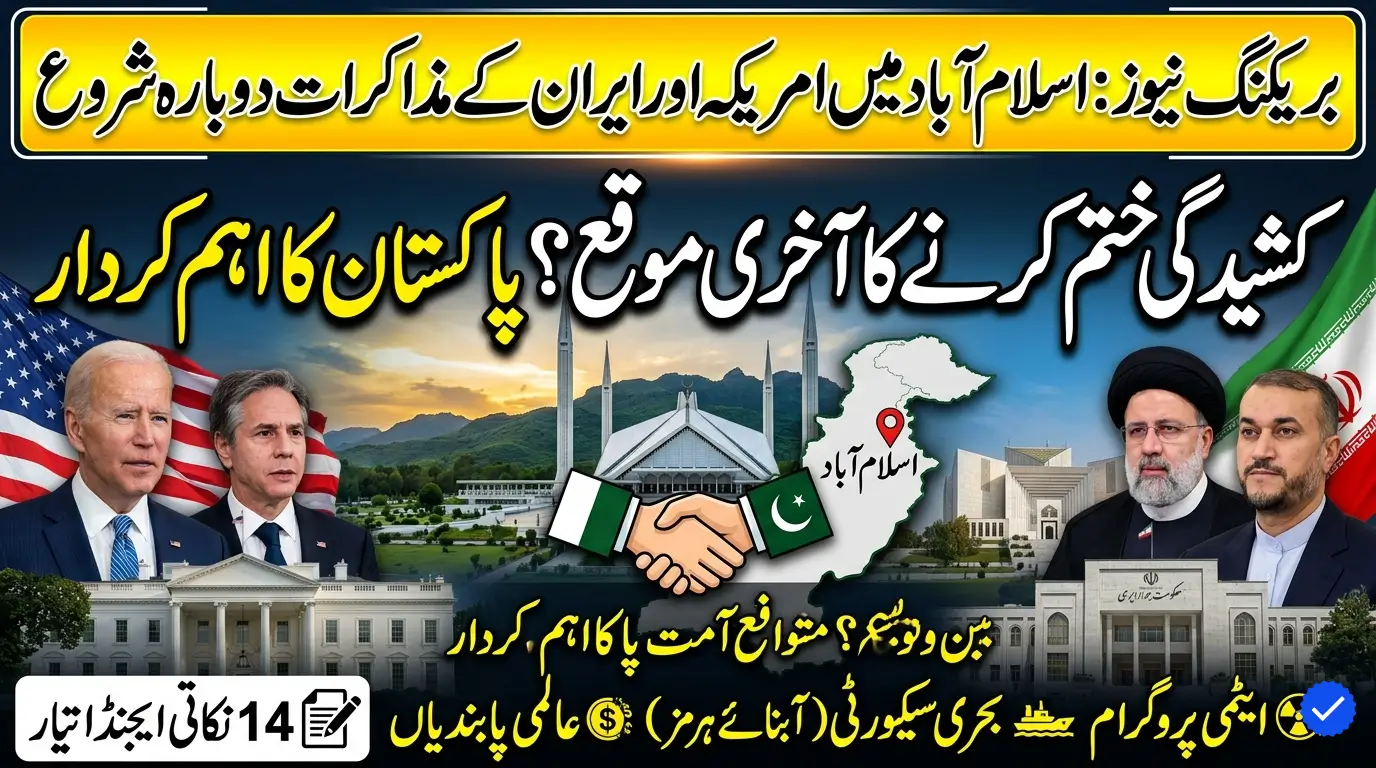
Fresh diplomatic activity between the United States and Iran is reportedly moving toward a new round of negotiations that could take place in Islamabad as early as next week. According to an international media report, both sides are working through indirect channels and mediators in an effort to revive stalled diplomacy after a period of heightened military tension and regional instability.
IMF Approves $1.2 Billion Loan for Pakistan
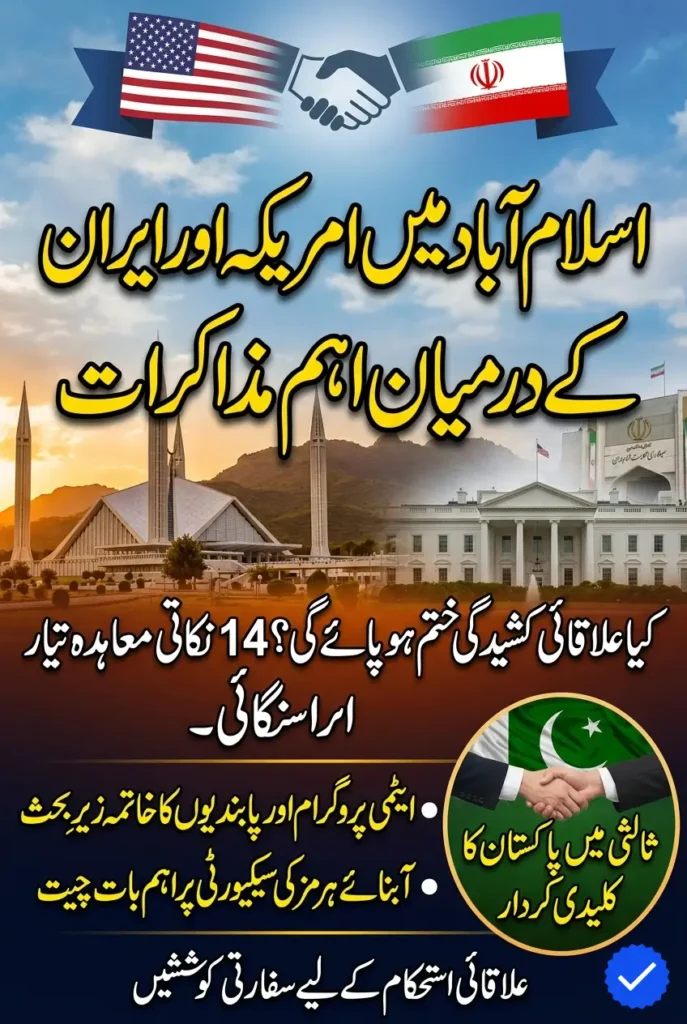
The proposed talks are said to be part of a broader attempt to prevent further escalation and rebuild a framework for dialogue. Sources indicate that negotiators are currently drafting a concise 14-point memorandum of understanding. This document is expected to serve as a working foundation for a month-long negotiation process aimed at reducing tensions and exploring possible pathways toward a political settlement.
Diplomatic Framework Under Discussion
If the initial phase of talks produces some progress, the framework could be extended with mutual agreement from both sides. However, diplomats involved in the process caution that major disagreements still remain, making any immediate breakthrough uncertain.
The latest diplomatic push comes after a significant rise in hostilities earlier this year. In late February, military strikes carried out by the United States and Israel targeted sites inside Iran. These actions triggered a strong response from Tehran, which launched retaliatory attacks in what quickly became a dangerous cycle of escalation.
Escalation and Regional Instability
The situation further intensified when shipping activity in the Strait of Hormuz was disrupted. As one of the world’s most important energy transit routes, any instability in this waterway immediately raised global concerns about oil supply chains and price volatility. The disruption not only affected regional trade but also increased fears of a wider confrontation involving multiple international actors.
Amid this volatile environment, diplomatic efforts were quietly initiated through third-party mediation. Pakistan played a key role in facilitating early communication channels between the two sides, aiming to prevent the conflict from spreading beyond control.
Early Summer Vacations Expected in Punjab Schools Due to Extreme Heat
Pakistan’s Mediation Efforts
Pakistan has emerged as an important intermediary in the ongoing crisis, leveraging its diplomatic relationships with both Washington and Tehran. Earlier in April, a ceasefire agreement was reportedly reached through Pakistani mediation efforts, temporarily reducing tensions and opening space for dialogue.
A preliminary round of talks was held in Islamabad on April 11, but it failed to produce a long-term or comprehensive agreement. While both sides showed willingness to engage, deep differences on core issues prevented any meaningful breakthrough.
Islamabad as a Diplomatic Venue
Despite the setback, diplomatic observers note that Islamabad remains a neutral and strategically significant location for continued negotiations. Its geographic proximity, political ties, and history of mediation in regional disputes make it a practical venue for sensitive diplomatic engagement.
The proposed memorandum of understanding reportedly covers several major and complex issues. One of the central topics is Iran’s nuclear program, which has long been a point of contention between Tehran and Western powers. Any agreement is expected to include monitoring mechanisms, limitations, or verification measures aimed at reducing concerns over nuclear escalation.
US President Trump Declares First Ever Russia-Ukraine Ceasefire in 4 Years
Nuclear Program and Security Concerns
Another major issue involves tensions in the Strait of Hormuz. Ensuring the safety and stability of maritime traffic in this strategic corridor is considered essential not only for regional security but also for global energy markets.
A particularly sensitive element of the discussions involves Iran’s stockpiles of highly enriched uranium. Reports suggest that one of the proposals under consideration includes the possibility of transferring these materials to another country under international supervision. However, this remains a highly controversial and unresolved issue.
Sanctions Relief Dispute
The most difficult sticking point appears to be the question of sanctions relief. Iran has consistently demanded easing of economic sanctions as part of any agreement, while the United States has maintained that any relief must be tied to strict verification and compliance measures. This disagreement continues to be one of the biggest obstacles in reaching a lasting settlement.
The diplomatic push comes at a time when global powers are closely watching developments in the Middle East. Energy security, maritime trade routes, and regional alliances all intersect in this evolving situation, making the outcome of any US-Iran talks highly significant beyond just bilateral relations.
Pumps Selling Old Petrol But Govt Still Pays for Fuel Not Even Imported Yet
Global and Strategic Implications
The situation was further complicated after a ceasefire arrangement was extended by US political leadership earlier this year without a clear deadline. Meanwhile, continued pressure on Iranian maritime operations has added another layer of tension to an already fragile situation.
Analysts suggest that while both sides may have strategic reasons to avoid a full-scale conflict, deep mistrust and long-standing political differences make negotiations extremely challenging. The success of any upcoming talks will largely depend on whether both parties are willing to compromise on key demands.
Pakistan’s Diplomatic Opportunity
For Pakistan, hosting these negotiations presents both an opportunity and a responsibility. A successful outcome could enhance its international diplomatic profile and reinforce its role as a regional stabilizing force. At the same time, failure of the talks could increase pressure on the region due to its proximity to major geopolitical fault lines.
Diplomatic observers believe that Islamabad’s involvement reflects a broader trend of regional actors stepping in to manage conflicts that have global implications. If the talks proceed as planned, Pakistan will once again find itself at the center of a high-stakes diplomatic effort involving two of the most closely watched actors on the global stage.
Govt Raises Petrol and Diesel Prices Again Across Pakistan
Conclusion
The potential resumption of US-Iran talks in Islamabad marks an important moment in ongoing efforts to reduce tensions and avoid further escalation. While the draft framework and mediation efforts signal cautious optimism, the path toward a durable agreement remains uncertain.
Key issues such as nuclear limitations, sanctions relief, and maritime security continue to divide the two sides. However, the willingness to return to dialogue suggests that both parties recognize the risks of continued confrontation.
As the international community watches closely, the coming weeks in Islamabad may play a critical role in determining whether this diplomatic initiative can move beyond temporary arrangements toward a more stable and lasting understanding.
FIFA Triples Prices of Most Expensive 2026 World Cup Final Tickets
FAQs
1. Where are the US-Iran talks expected to take place?
The talks are reportedly expected to resume in Islamabad, Pakistan, as early as next week, according to media reports.
2. What is the purpose of the proposed negotiations?
The main aim is to revive diplomacy between the US and Iran, reduce tensions, and work toward a possible framework for a longer-term agreement.
3. What issues will be discussed in the talks?
Key issues include Iran’s nuclear program, sanctions relief, security in the Strait of Hormuz, and the handling of Iran’s enriched uranium stockpiles.
4. Why is Pakistan involved in the mediation process?
Pakistan has acted as a mediator due to its diplomatic relations with both countries and its strategic position in regional diplomacy, helping facilitate earlier ceasefire efforts and dialogue.
5. What are the main challenges to reaching an agreement?
The biggest challenges include disagreements over sanctions relief, nuclear restrictions, and deep political mistrust between the United States and Iran.
Final Words
The proposed talks highlight how fragile yet essential diplomacy has become in resolving modern geopolitical conflicts. While deep mistrust remains between the United States and Iran, the fact that negotiations are being considered again shows that dialogue is still possible. The success of these efforts will depend on patience, compromise, and sustained international support to prevent further escalation in an already volatile region.